



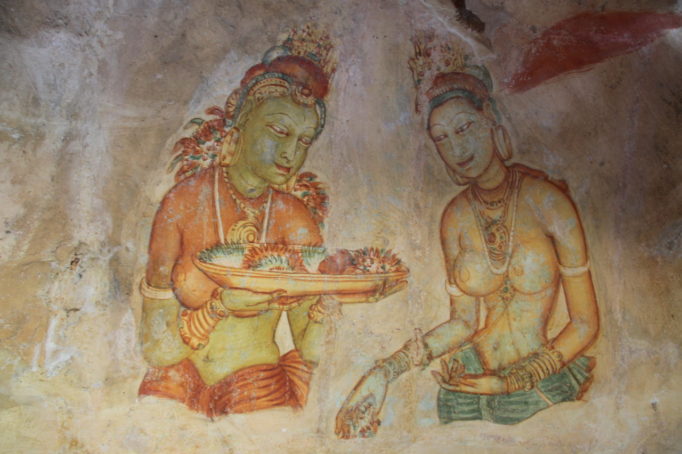
[:en]
History of Sri Lanka
The history of Sri Lanka begins around 30,000 years ago. Chronicles, including the Mahawansa, the Dipavamsa, the Culavamsa and the Rajaveliya, record events from the beginnings of the Sinhalese monarchy in the 6th century BC, the Tamil Elara (monarch) in the 2nd century BC; through the arrival of European Colonialists in the 16th century; and to the disestablishment of the monarchy in 1815. Some mentions of the country are found in the Ramayana, the Mahabharata and the Lankavatara Sutra Mahayana Buddhism texts of Gautama Lord Buddha’s teachings. Buddhism was introduced in the 3rd century BC by Arhath Mahinda (son of the Indian emperor Ashoka the Great).
From the 16th century, some coastal areas of the country were ruled by the Portuguese, Dutch and British. Sri Lanka was ruled by 181 Kings and Queens from the Anuradhapura to Kandy periods. After 1815 the entire nation was under British colonial rule and armed uprisings against the British took place in the 1818 Uva Rebellion and the 1848 Matale Rebellion. Independence was finally granted in 1948 but the country remained a Dominion of the British Empire.
In 1972 Sri Lanka assumed the status of a Republic. A constitution was introduced in 1978 which made the Executive President the head of state. The Sri Lankan Civil War began in 1983, including an armed youth uprising in 1987–1989, with the 25-year-long civil war ending in 2009.
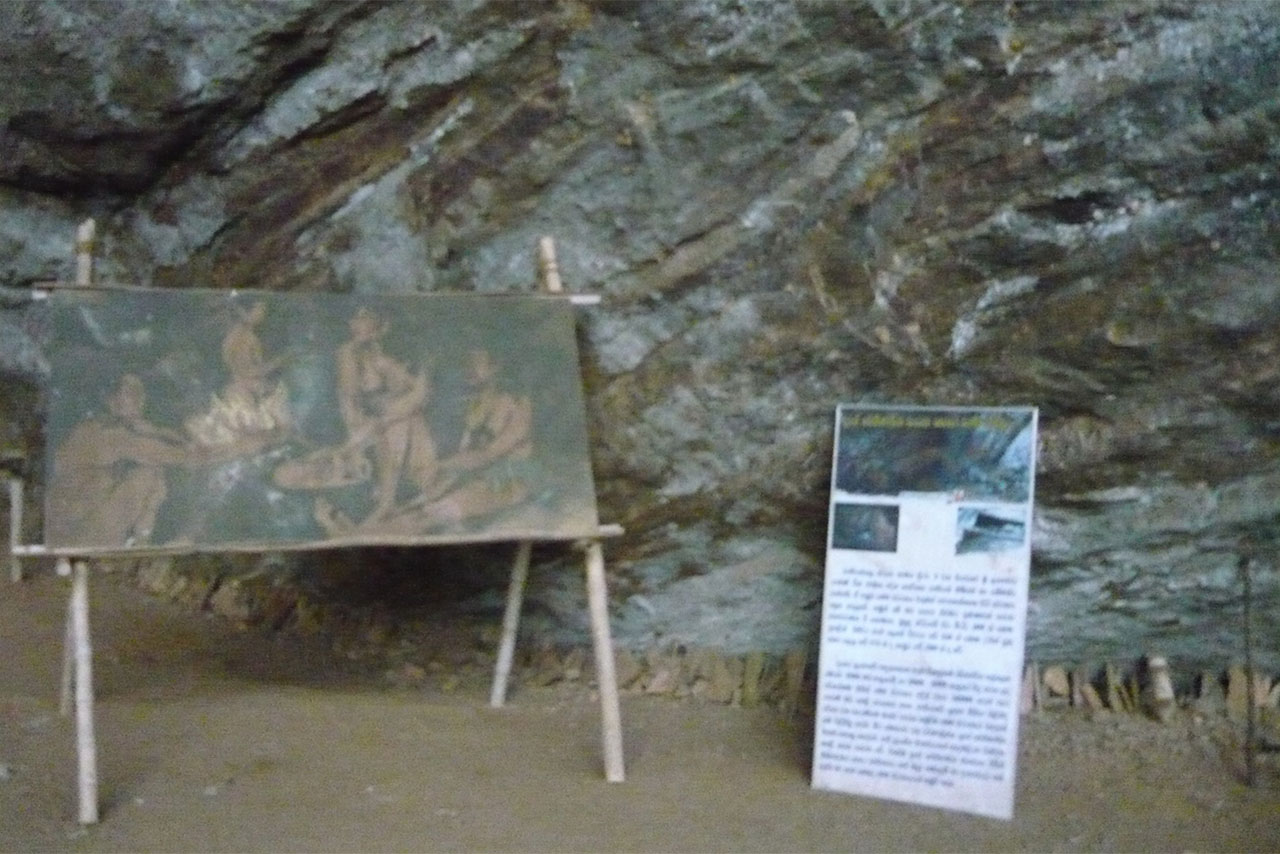
Prehistoric era of Sri Lanka
Evidence of human colonization in Sri Lanka appears at the site of Balangoda. Balangoda Man arrived on the island about 34,000 years ago and has been identified as Mesolithic hunter gatherers who lived in caves. Several of these caves, including the well-known Batadombalena and the Fa-Hien Rock cave, have yielded many artifacts from these people who are currently the first known inhabitants of the island.
Balangoda Man probably created Horton Plains, in the central hills, by burning the trees in order to catch game. However, the discovery of oats and barley on the plains at about 15,000 BC suggests that agriculture had already developed at this early date. Several minute granite tools (about 4 centimeters in length), earthenware, remnants of charred timber, and clay burial pots date to the Mesolithic Stone Age. Human remains dating to 6000 BC have been discovered during recent excavations around a cave at Varana Raja Maha vihara and in the Kalatuwawa area.
Cinnamon is native to Sri Lanka and has been found in Ancient Egypt as early as 1500 BC, suggesting early trade between Egypt and the island’s inhabitants. It is possible that Biblical Tarshish was located on the island. James Emerson Tennent identified Tarshish with Galle. The protohistoric Early Iron Age appears to have established itself in South India by at least as early as 1200 BC, if not earlier (Possehl 1990; Deraniyagala 1992:734). The earliest manifestation of this in Sri Lanka is radiocarbon-dated to c. 1000–800 BC at Anuradhapura and Aligala shelter in Sigiriya (Deraniyagala 1992:709-29; Karunaratne and Adikari 1994:58; Mogren 1994:39; with the Anuradhapura dating corroborated by Coningham 1999). It is very likely that further investigations will push back the Sri Lankan lower boundary to match that of South India.
Archaeological evidence for the beginnings of the Iron age in Sri Lanka is found at Anuradhapura, where a large city–settlement was founded before 900 BC. The settlement was about 15 hectares in 900 BC, but by 700 BC it had expanded to 50 hectares. A similar site from the same period has also been discovered near Aligala in Sigiriya.
The hunter-gatherer people known as the Wanniyala-Aetto or Veddas, who still live in the central, Uva and north-eastern parts of the island, are probably direct descendants of the first inhabitants, Balangoda man. They may have migrated to the island from the mainland around the time humans spread from Africa to the Indian subcontinent.
Around 500 BC, Sri Lankans developed a unique hydraulic civilization. Achievements include the construction of the largest reservoirs and dams of the ancient world as well as enormous pyramid-like Stupa (Dagoba) architecture. This phase of Sri Lankan culture was profoundly influenced by early Buddhism.
Buddhist scriptures note three visits by the Buddha to the island to see the Naga Kings, who are said to be snakes that can take the form of a human at, will. Snake transformations of the kings are thought to be symbolic and not based on historical fact.
The earliest surviving chronicles from the island, the Dipavamsa and the Mahavamsa, say that tribes of Yakkhas (demon worshippers), Nagas (cobra worshippers) and Devas (god worshippers) inhabited the island prior to the migration of Vijaya. Pottery has been found at Anuradhapura bearing Brahmi script and non-Brahmi writing and date back to 600 BC – one of the oldest examples of the script.
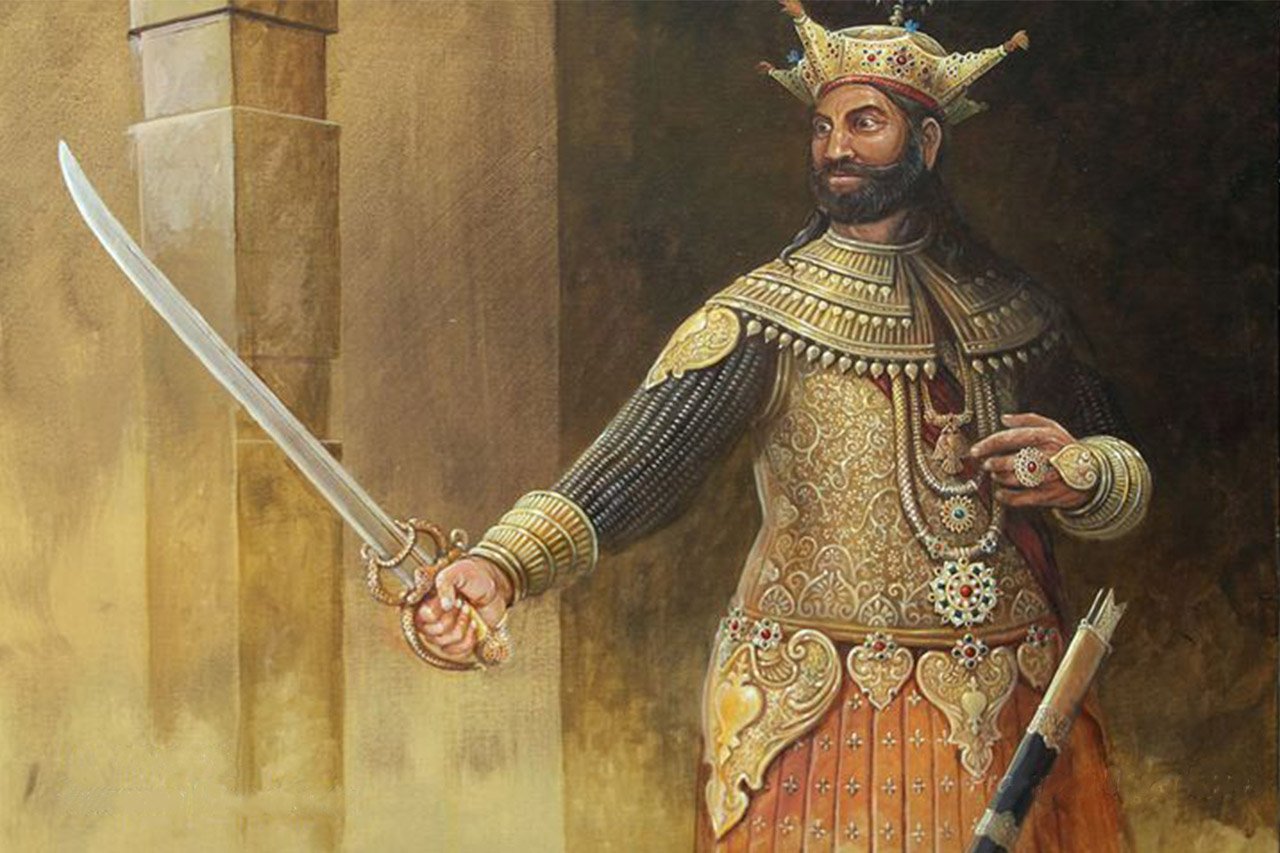
Prince Vijaya
Prince Vijaya was the first recorded King of Sri Lanka mentioned in the Pali chronicles. His reign is traditionally dated to 543–505 BCE.The primary source for his life-story is the Mahavamsa.
The Sri Lankan chronicle, the Mahavamsa, written circa 400 CE by the monk Mahanama using the Dipavamsa and Sinhala Attakatha as sources, correlates well with Indian histories of the period. Lanka, before colonization by Prince Vijaya, was earlier inhabited by the ancient tribes known as “Yakkhas” and “Nagas”. With the arrival of Prince Vijaya and his 700 followers, the history of the Sinhalese began. Vijaya was the eldest son of King Sinhabahu and his Queen Sinhasivali of Bhurishrestha Kingdom. Vijaya married Kuveni, a local Yakkha princess, like his army marrying off local women. Later this gave rise to the modern Sinhala race. Vijaya landed on Sri Lanka near Mahathitha (Mannar), and named the island Thambaparni “copper-colored palms”.
This is attested in Ptolemy’s map of the ancient world. The Mahavamsa also claims that Lord Buddha visited Sri Lanka three times. In the first instance, it was to stop a war between a Naga king and his son-in-law who were fighting over a ruby chair. It is said that on his last visit, the Buddha left his foot-print on Sripada (Adam’s Peak). Tamirabharani was the old name for the second longest river in Sri Lanka (now known as Malwatu Oya in Sinhala & Aruvi (Aru in Tamil). This river was the main supply-route connecting the capital, Anuradhapura, to Mahathitha (Mannar). The waterway was used by Greek and Chinese ships traveling the southern Silk Route. Mahathitha was an ancient port linking Sri Lanka to Bengal and the Persian Gulf.
At the beginning of the chronicle, the king of Bengal is married to the daughter of the King of Kalinga. Their daughter, Suppadevi, was not only ‘very fair and very amorous’, but was also prophesied to consummate a ‘union with the king of beasts’- in the Mahavamsa, a lion. When this duly happened, she gave birth to two children – Sinhabahu and Sinhasivali. ‘Sinhabahu’ means ‘Lion-Armed’, and the young prince himself is described as having “hands and feet…formed like a lion’s.The family lived together in the lion’s cave, blocked in by a large rock the lion had placed to prevent their exit. Eventually, however, Suppadevi and her two children flee the cave. Later Sinhabahu kills his father with an arrow. Then, marrying his sister, he establishes a kingdom based on a city called Singhapur. Sinhasivali bears him a series of twins; their eldest child is named Vijaya, and his younger twin brother Sumitta. However, a critical twist and serious study by scholars and researchers with further references suggest that the king of Sinhpur/Sinhapura (Sihor) region’s very ancient telltales and references about Prince Vijaya, his exile, his route, are the ones which connect strongly to the history of Sri Lanka and to the Sinhalese people and culture.
Vijaya is described as indulging in “evil conduct and his followers were… (like himself), and many intolerable deeds of violence were done by them.” So antisocial were his activities that the people of the kingdom eventually demanded that the now-aging King Sinhabahu have him executed. Instead Sinhabhu had half their heads shaved, a sign of disgrace, and exiled Vijaya with his followers, their wives and children, from the kingdom – traditionally said to number a total of 700 souls. After resting in several places they are found to be hostile, and the wayward prince and his associates “landed in Lanka, in the region called Tambapanni”.
A second geographical issue is the location of Tambapanni, the landing-site of the Vijaya expedition. The Rajaveliya states that the group saw Adam’s Peak from their boats and thus landed in Southern Sri Lanka, in an area that eventually became part of the Kingdom of Ruhuna. British historian H. Parker narrowed this down to the mouth of Kirindi Oya. This is now thought to be a far too Southerly location. The more favored region currently is between the cities of Mannar and Negombo, and Puttalam, where the copper-colored beaches may have given rise to the name Tambapanni, which means ‘copper-palmed’.
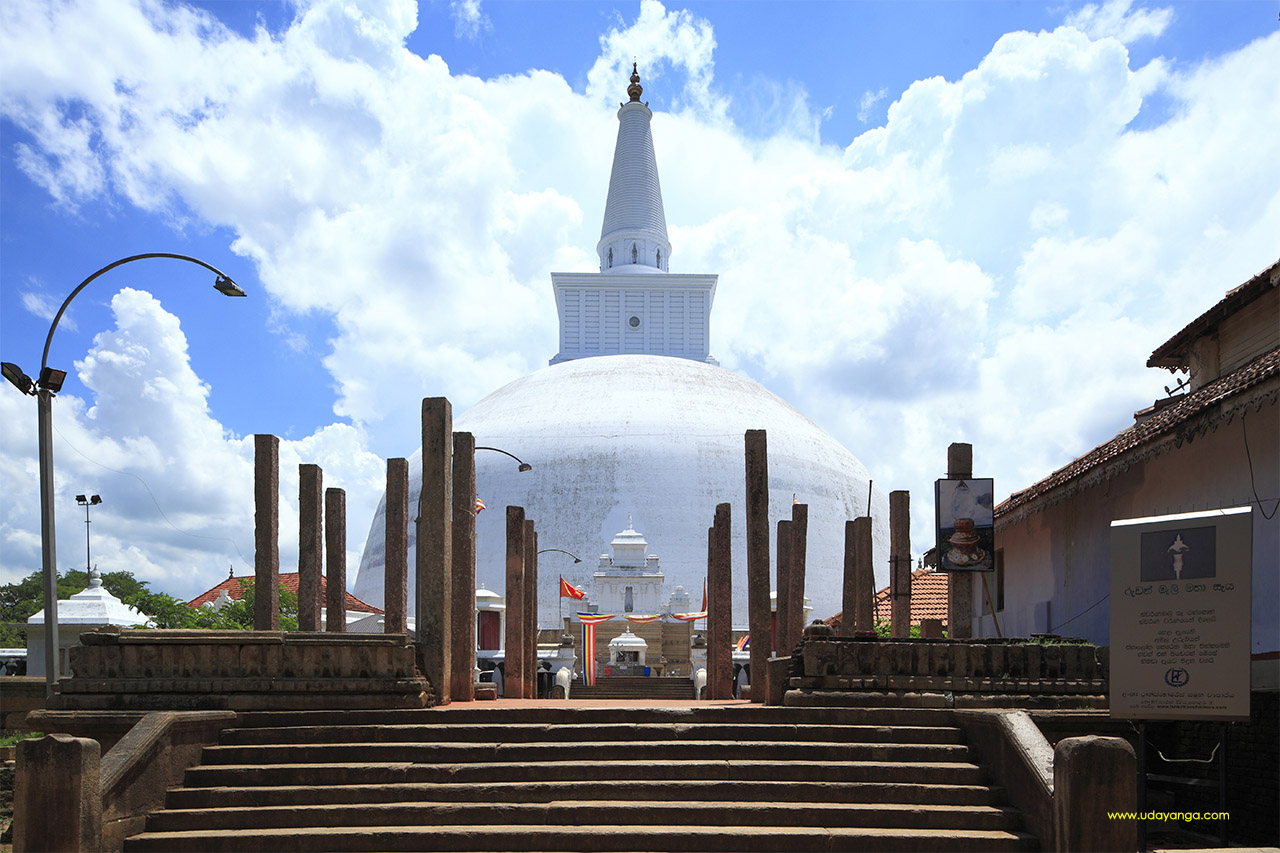
Anuradhapura Kingdom
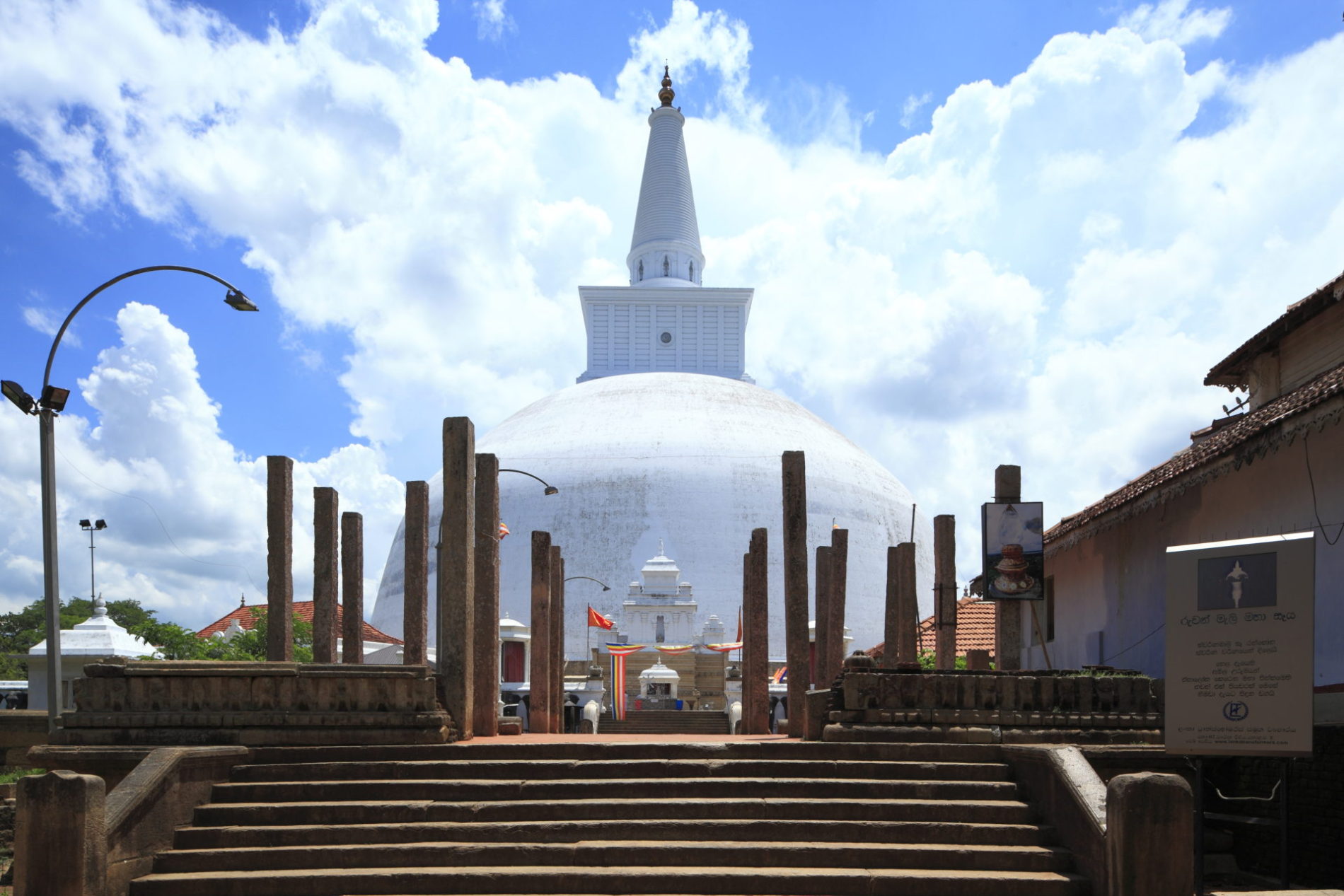
King Pandukabhaya, the founder and first ruler of the Anuradhapura Kingdom, fixed village boundaries in the country and established an administration system by appointing village headmen. He constructed hermitages, houses for the poor, cemeteries, and irrigation tanks. He brought a large portion of the country under the control of the Anuradhapura Kingdom. However, it was not until the reign of Dutthagamani (161–137 BC) that the whole country was unified under the Anuradhapura Kingdom. He defeated 32 rulers in different parts of the country before he killed Elara, the South Indian ruler who was occupying Anuradhapura, and ascended to the throne. The chronicle Mahavamsa describes his reign with much praise, and devotes 11 chapters out of 37 for his reign. He is described as both a warrior king and a devout Buddhist. After unifying the country, he helped establish Buddhism on a firm and secure base, and built several monasteries and shrines including the Ruwanweli Seya and Lovamahapaya.
Another notable king of the Anuradhapura Kingdom is Valagamba (103, 89–77 BC), also known as Vatthagamani Abhaya, who was overthrown by five invaders from South India. He regained his throne after defeating these invaders one by one and unified the country again under his rule. Saddha Tissa (137–119 BC), Mahaculi Mahatissa (77–63 BC), Vasabha (67–111), Gajabahu I (114–136), Dhatusena (455–473), Aggabodhi I (571–604) and Aggabodhi II (604–614) were among the rulers who held sway over the entire country after Dutthagamani and Valagamba. Rulers from Kutakanna Tissa (44–22 BC) to Amandagamani (29–19 BC) also managed to keep the whole country under the rule of the Anuradhapura Kingdom. Other rulers could not maintain their rule over the whole island, and independent regions often existed in Ruhuna and Malayarata (hill country) for limited periods. During the final years of the Anuradhapura Kingdom, rebellions sprang up and the authority of the kings gradually declined. By the time of Mahinda V (982–1017), the last king of the Anuradhapura Kingdom, the rule of the king had become so weak that he could not even properly organize the collection of taxes.
During the times of Vasabha, Mahasena (274–301) and Dhatusena, the construction of large irrigation tanks and canals was given priority. Vasabha constructed 11 tanks and 12 canals. Mahasen constructed 16 tanks and a large canal. And Dhatusena built 18 tanks. Most of the other kings have also built irrigation tanks throughout Rajarata, the area around Anuradhapura. By the end of the Anuradhapura Kingdom, a large and intricate irrigation network was available throughout Rajarata to support the agriculture of the country. Because the kingdom was largely based on agriculture, the construction of irrigation works was a major achievement of the Anuradhapura Kingdom, ensuring water supply in the dry zone and helping the country grow mostly self-sufficient. Several kings, most notably Vasabha and Mahasena, built large reservoirs and canals, which created a vast and complex irrigation network in the Rajarata area throughout the Anuradhapura period. These constructions are an indication of the advanced technical and engineering skills used to create them. The famous paintings and structures at Sigiriya; the Ruwanwelisaya, Jetavana stupas, and other large stupas; large buildings like the Lovamahapaya and religious works are landmarks demonstrating the Anuradhapura period’s advancement in sculpting.
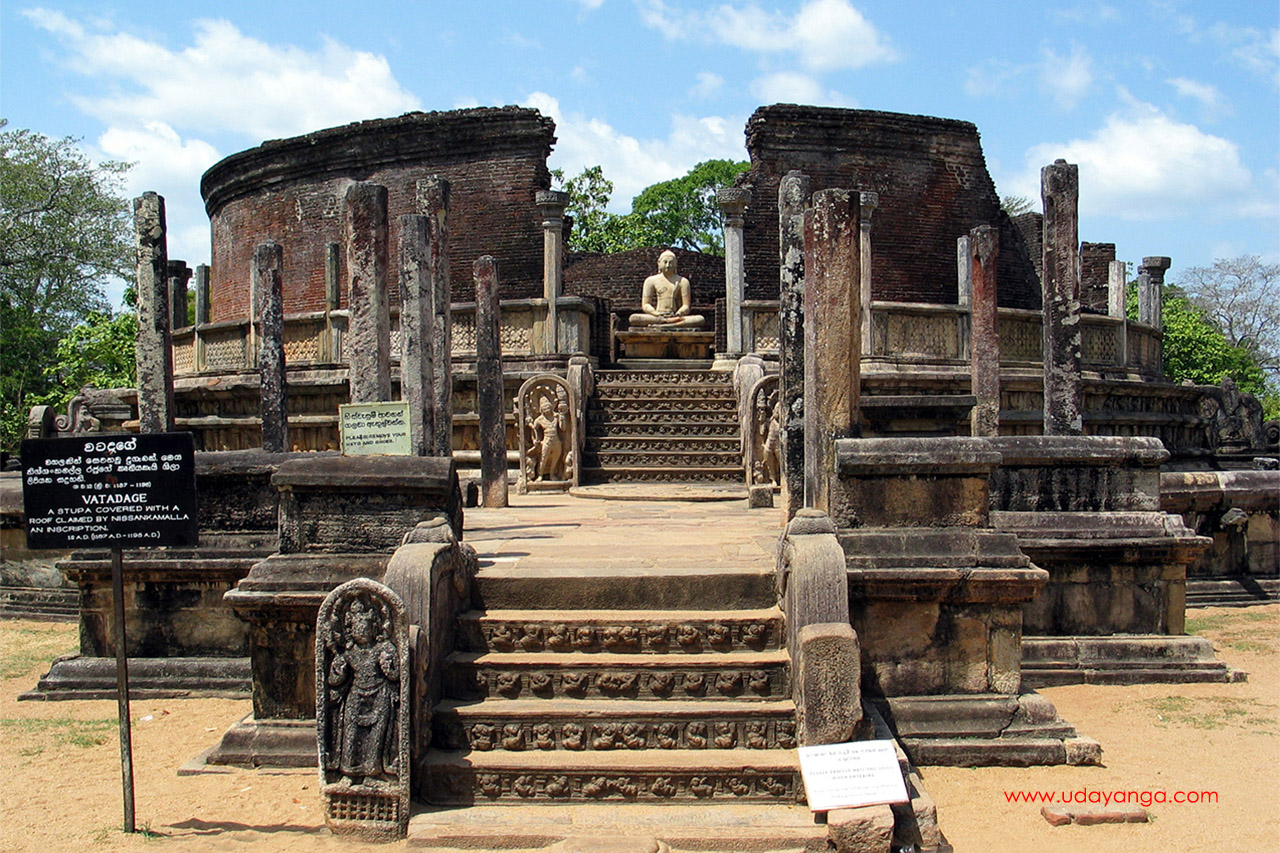
The Kingdom of Polonnaruwa
The Kingdom of Polonnaruwa was the kingdom from which Sri Lankan kings ruled the island from the 8th century until 1310 CE. Pollonnaruwa was the fifth administrative center of the Kingdom of Rajarata.
The city is situated on the left bank of River Mahaweli. Archeological evidence and accounts in chronicles suggests that the city is as old as Anuradhapura. The Vijithagama settlement made by Vijitha in 400 BC is thought to be situated near the town. Name Pulathisipura is derived from the guardian sage of the city Pulasthi there are several theories on the name Polonnaruwa.According to the most accepted one word is derived from conjunction of to words Pulun which means cotton in Sinhala and Maruwa which mean exchanging. So Pulun+Maruwa=Polonnaruwa
After ruling the country for over 1,200 years from the Kingdom of Anuradhapura, Sri Lanka was captured by Cholas in 1017A.D.Chola King Rajarajan (I) captured Anuradhapura and taken king Mahinda (V) as a captive to India. Mahinda (V) died in India on 1029. Cholas shifted the capital to Polonnaruwa and ruled Sri Lanka for 52 years. Polonnaruwa was named as Jananathamangalam by the Cholas. King Vijayabahu (I) defeated Cholas and regained the Sinhalese lineage. Polonnaruwa had previously been an important settlement in the country, as it commanded the crossings of the Mahaweli Ganga towards Anuradhapura.
Some of the rulers of Polonnaruwa include Vijayabahu (I) and Parakramabahu (I) (Parakramabahu the Great). Most of Polonnaruwa that remains today dates from after the 1150s, as the extensive civil wars that preceded Parakramabahu’s accession to the throne devastated the city. Parakrama Pandyan (II) from Pandyan Kingdom invaded the Kingdom of Polonnaruwa in the thirteenth century and ruled from 1212 to 1215 CE. He was succeeded by Kalinga Magha the founder of the Jaffna kingdom. Kalinga Magha ruled 21 years until he was expelled from Polonnaruwa in 1236.
The Kingdom of Polonnaruwa was abandoned in the 14th century, and the seat of government for the Sinhalese kings was moved to Yapahuwa. Although many factors contributed to this, the leading cause of the abandonment of Polonnaruwa as the kingdom of Sri Lanka was its susceptibility to invasions from south India.
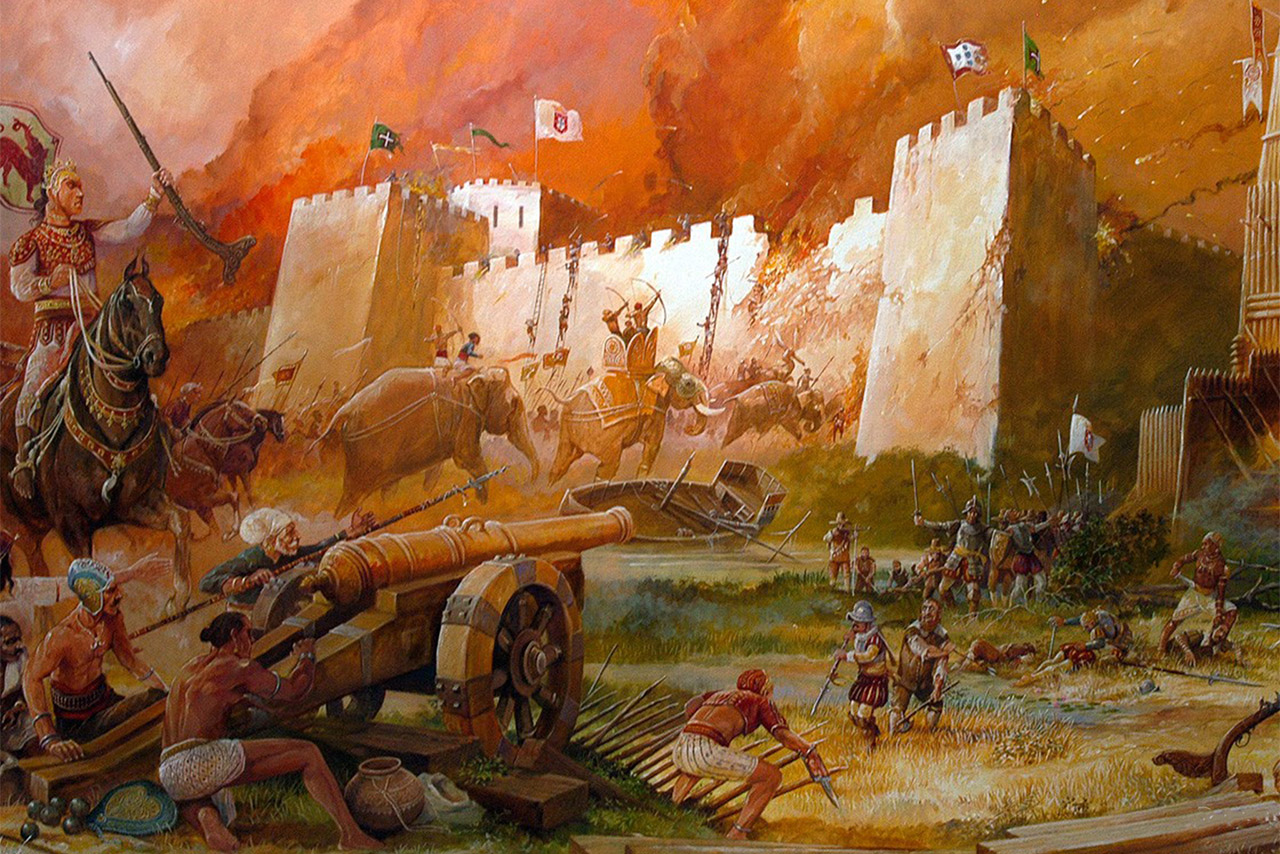
The Portuguese in Sri Lanka (1505-1658)
By the late fifteenth century, Portugal, which had already established its dominance as a maritime power in the Atlantic, was exploring new waters. In 1497 Vasco da Gama sailed around the Cape of Good Hope and discovered an ocean route connecting Europe with India, thus inaugurating a new era of maritime supremacy for Portugal. The Portuguese were consumed by two objectives in their empire-building efforts: to convert followers of non-Christian religions to Roman Catholicism and to capture the major share of the spice trade for the European market. To carry out their goals, the Portuguese did not seek territorial conquest, which would have been difficult given their small numbers. Instead, they tried to dominate strategic points through which trade passed. By virtue of their supremacy on the seas, their knowledge of firearms, and by what has been called their “desperate soldiering” on land, the Portuguese gained an influence in South Asia that was far out of proportion to their numerical strength.
At the onset of the European period in Sri Lanka in the sixteenth century, there were three native centers of political power: the two Sinhalese kingdoms of Kotte and Kandy and the Tamil kingdom at Jaffna. Kotte was the principal seat of Sinhalese power, and it claimed a largely imaginary overlordship not only over Kandy but also over the entire island. None of the three kingdoms, however, had the strength to assert itself over the other two and reunify the island.
In 1505 Don Lourenço de Almeida, son of the Portuguese viceroy in India, was sailing off the southwestern coast of Sri Lanka looking for Moorish ships to attack when stormy weather forced his fleet to dock at Galle. Word of these strangers who “eat hunks of white stone and drink blood (presumably wine). . . and have guns with a noise louder than thunder. . .” spread quickly and reached King Parakramabahu( VIII) of Kotte (1484-1508), who offered gifts of cinnamon and elephants to the Portuguese to take back to their home port at Cochin on the Malabar Coast of southwestern India. The king also gave the Portuguese permission to build a residence in Colombo for trade purposes. Within a short time, however, Portuguese militaristic and monopolistic intentions became apparent. Their heavily fortified “trading post” at Colombo and open hostility toward the island’s Muslim traders aroused Sinhalese suspicions.
Following the decline of the Chola as a maritime power in the twelfth century, Muslim trading communities in South Asia claimed a major share of commerce in the Indian Ocean and developed extensive east-west, as well as Indo-Sri Lankan, commercial trade routes. As the Portuguese expanded into the region, this flourishing Muslim trade became an irresistible target for European interlopers. The sixteenth-century Roman Catholic Church was intolerant of Islam and encouraged the Portuguese to take over the profitable shipping trade monopolized by the Moors. In addition, the Portuguese would later have another strong motive for hostility toward the Moors because the latter played an important role in the Kandyan economy, one that enabled the kingdom successfully to resist the Portuguese.
The Portuguese soon decided that the island, which they called Cilao, conveyed a strategic advantage that was necessary for protecting their coastal establishments in India and increasing Lisbon’s potential for dominating Indian Ocean trade. These incentives proved irresistible, and, the Portuguese, with only a limited number of personnel, sought to extend their power over the island. They had not long to wait. Palace intrigue and then revolution in Kotte threatened the survival of the kingdom. The Portuguese skillfully exploited these developments. In 1521 Bhuvanekabahu, the ruler of Kotte, requested Portuguese aid against his brother, Mayadunne, the more able rival king who had established his independence from the Portuguese at Sitawake, a domain in the Kotte kingdom. Powerless on his own, King Bhuvanekabahu became a puppet of the Portuguese. But shortly before his death in 1551, the king successfully obtained Portuguese recognition of his grandson, Dharmapala, as his successor. Portugal pledged to protect Dharmapala from attack in return for privileges, including a continuous payment in cinnamon and permission to rebuild the fort at Colombo on a grander scale. When Bhuvanekabahu died, Dharmapala, still a child, was entrusted to the Franciscans for his education, and, in 1557, he converted to Roman Catholicism. His conversion broke the centuries-old connection between Buddhism and the state, and a great majority of Sinhalese immediately disqualified the young monarch from any claim to the throne. The rival king at Sitawake exploited the issue of the prince’s conversion and accused Dharmapala of being a puppet of a foreign power.
Before long, rival King Mayadunne had annexed much of the Kotte kingdom and was threatening the security of the capital city itself. The Portuguese were obliged to defend Dharmapala (and their own credibility) because the ruler lacked a popular following. They were subsequently forced to abandon Kotte and retreat to Colombo, taking the despised puppet king with them. Mayadunne and, later, his son, Rajasinha, besieged Colombo many times. The latter was so successful that the Portuguese were once even forced to eat the flesh of their dead to avoid starvation. The Portuguese would probably have lost their holdings in Sri Lanka had they not had maritime superiority and been able to send reinforcements by sea from their base at Goa on the western coast of India.
The Kingdom of Sitawake put up the most vigorous opposition to Western imperialism in the island’s history. For the seventy- three-year period of its existence, Sitawake (1521-94) rose to become the predominant power on the island, with only the Tamil kingdom at Jaffna and the Portuguese fort at Colombo beyond its control. When Rajasinha died in 1593, no effective successors were left to consolidate his gains, and the kingdom collapsed as quickly as it had arisen.
Dharmapala, despised by his countrymen and totally compromised by the Portuguese, was deprived of all his royal duties and became completely manipulated by the Portuguese advisers surrounding him. In 1580 the Franciscans persuaded him to make out a deed donating his dominions to the king of Portugal. When Dharmapala died in 1597, the Portuguese emissary, the captain-general, took formal possession of the kingdom.
Portuguese missionaries had also been busily involving themselves in the affairs of the Tamil kingdom at Jaffna, converting almost the entire island of Mannar to Roman Catholicism by 1544. The reaction of Sangily, king of Jaffna, however, was to lead an expedition to Mannar and decapitate the resident priest and about 600 of his congregation. The king of Portugal took this as a personal affront and sent several expeditions against Jaffna. The Portuguese, having disposed of the Tamil king who fled south, installed one of the Tamil princes on the throne, obliging him to pay an annual tribute. In 1619 Lisbon annexed the Kingdom of Jaffna.
After the annexation of Jaffna, only the central highland Kingdom of Kandy–the last remnant of Buddhist Singhalese power– remained independent of use control. The kingdom acquired a new significance as custodian of Singhalese nationalism. The Portuguese attempted the same strategy they had used successfully at Kotte and Jaffna and set up a puppet on the throne. They were able to put a queen on the Kandyan throne and even to have her baptized. But despite considerable Portuguese help, she was not able to retain power. The Portuguese spent the next half century trying in vain to expand their control over the Kingdom of Kandy. In one expedition in 1630, the Kandyans ambushed and massacred the whole Portuguese force, including the captain-general. The Kandyans fomented rebellion and consistently frustrated Portuguese attempts to expand into the interior.
The areas the Portuguese claimed to control in Sri Lanka were part of what they majestically called the Estado da India and were governed in name by the viceroy in Goa, who represented the king. But in actuality, from headquarters in Colombo, the captain-general, a subordinate of the viceroy, directly ruled Sri Lanka with all the affectations of royalty once reserved for the Sinhalese kings.
The Portuguese did not try to alter the existing basic structure of native administration. Although Portuguese governors were put in charge of each province, the customary hierarchy, determined by caste and land ownership, remained unchanged. Traditional Singhalese institutions were maintained and placed at the service of the new rulers. Portuguese administrators offered land grants to Europeans and Singhalese in place of salaries, and the traditional compulsory labor obligation was used for construction and military purposes.
The Portuguese tried vigorously, if not fanatically, to force religious and, to a lesser extent, educational, change in Sri Lanka. They discriminated against other religions with a vengeance, destroyed Buddhist and Hindu temples, and gave the temple lands to Roman Catholic religious orders. Buddhist monks fled to Kandy, which became a refuge for people disaffected with colonial rule. One of the most durable legacies of the Portuguese was the conversion of a large number of Sinhalese and Tamils to Roman Catholicism. Although small pockets of Nestorian Christianity had existed in Sri Lanka, the Portuguese were the first to propagate Christianity on a mass scale.
Sixteenth-century Portuguese Catholicism was intolerant. But perhaps because it caught Buddhism at its nadir, it nevertheless became rooted firmly enough on the island to survive the subsequent persecutions of the Protestant Dutch Reformists. The Roman Catholic Church was especially effective in fishing communities–both Singhalese and Tamil–and contributed to the upward mobility of the castes associated with this occupation. Portuguese emphasis on proselytization spurred the development and standardization of educational institutions. In order to convert the masses, mission schools were opened, with instruction in Portuguese and Singhalese or Tamil. Many Singhalese converts assumed Portuguese names. The rise of many families influential in the twentieth century dates from this period. For a while, Portuguese became not only the language of the upper classes of Sri Lanka but also the lingua franca of prominence in the Asian maritime world.
At the onset of the European period in Sri Lanka in the sixteenth century, there were three native centers of political power: the two Sinhalese kingdoms of Kotte and Kandy and the Tamil kingdom at Jaffna. Kotte was the principal seat of Sinhalese power, and it claimed a largely imaginary overlordship not only over Kandy but also over the entire island. None of the three kingdoms, however, had the strength to assert itself over the other two and reunify the island.
In 1505 Don Lourenço de Almeida, son of the Portuguese viceroy in India, was sailing off the southwestern coast of Sri Lanka looking for Moorish ships to attack when stormy weather forced his fleet to dock at Galle. Word of these strangers who “eat hunks of white stone and drink blood (presumably wine). . . and have guns with a noise louder than thunder. . .” spread quickly and reached King Parakramabahu( VIII) of Kotte (1484-1508), who offered gifts of cinnamon and elephants to the Portuguese to take back to their home port at Cochin on the Malabar Coast of southwestern India. The king also gave the Portuguese permission to build a residence in Colombo for trade purposes. Within a short time, however, Portuguese militaristic and monopolistic intentions became apparent. Their heavily fortified “trading post” at Colombo and open hostility toward the island’s Muslim traders aroused Sinhalese suspicions.
Following the decline of the Chola as a maritime power in the twelfth century, Muslim trading communities in South Asia claimed a major share of commerce in the Indian Ocean and developed extensive east-west, as well as Indo-Sri Lankan, commercial trade routes. As the Portuguese expanded into the region, this flourishing Muslim trade became an irresistible target for European interlopers. The sixteenth-century Roman Catholic Church was intolerant of Islam and encouraged the Portuguese to take over the profitable shipping trade monopolized by the Moors. In addition, the Portuguese would later have another strong motive for hostility toward the Moors because the latter played an important role in the Kandyan economy, one that enabled the kingdom successfully to resist the Portuguese.
The Portuguese soon decided that the island, which they called Cilao, conveyed a strategic advantage that was necessary for protecting their coastal establishments in India and increasing Lisbon’s potential for dominating Indian Ocean trade. These incentives proved irresistible, and, the Portuguese, with only a limited number of personnel, sought to extend their power over the island. They had not long to wait. Palace intrigue and then revolution in Kotte threatened the survival of the kingdom. The Portuguese skillfully exploited these developments. In 1521 Bhuvanekabahu, the ruler of Kotte, requested Portuguese aid against his brother, Mayadunne, the more able rival king who had established his independence from the Portuguese at Sitawake, a domain in the Kotte kingdom. Powerless on his own, King Bhuvanekabahu became a puppet of the Portuguese. But shortly before his death in 1551, the king successfully obtained Portuguese recognition of his grandson, Dharmapala, as his successor. Portugal pledged to protect Dharmapala from attack in return for privileges, including a continuous payment in cinnamon and permission to rebuild the fort at Colombo on a grander scale. When Bhuvanekabahu died, Dharmapala, still a child, was entrusted to the Franciscans for his education, and, in 1557, he converted to Roman Catholicism. His conversion broke the centuries-old connection between Buddhism and the state, and a great majority of Sinhalese immediately disqualified the young monarch from any claim to the throne. The rival king at Sitawake exploited the issue of the prince’s conversion and accused Dharmapala of being a puppet of a foreign power.
Before long, rival King Mayadunne had annexed much of the Kotte kingdom and was threatening the security of the capital city itself. The Portuguese were obliged to defend Dharmapala (and their own credibility) because the ruler lacked a popular following. They were subsequently forced to abandon Kotte and retreat to Colombo, taking the despised puppet king with them. Mayadunne and, later, his son, Rajasinha, besieged Colombo many times. The latter was so successful that the Portuguese were once even forced to eat the flesh of their dead to avoid starvation. The Portuguese would probably have lost their holdings in Sri Lanka had they not had maritime superiority and been able to send reinforcements by sea from their base at Goa on the western coast of India.
The Kingdom of Sitawake put up the most vigorous opposition to Western imperialism in the island’s history. For the seventy- three-year period of its existence, Sitawake (1521-94) rose to become the predominant power on the island, with only the Tamil kingdom at Jaffna and the Portuguese fort at Colombo beyond its control. When Rajasinha died in 1593, no effective successors were left to consolidate his gains, and the kingdom collapsed as quickly as it had arisen.
Dharmapala, despised by his countrymen and totally compromised by the Portuguese, was deprived of all his royal duties and became completely manipulated by the Portuguese advisers surrounding him. In 1580 the Franciscans persuaded him to make out a deed donating his dominions to the king of Portugal. When Dharmapala died in 1597, the Portuguese emissary, the captain-general, took formal possession of the kingdom.
Portuguese missionaries had also been busily involving themselves in the affairs of the Tamil kingdom at Jaffna, converting almost the entire island of Mannar to Roman Catholicism by 1544. The reaction of Sangily, king of Jaffna, however, was to lead an expedition to Mannar and decapitate the resident priest and about 600 of his congregation. The king of Portugal took this as a personal affront and sent several expeditions against Jaffna. The Portuguese, having disposed of the Tamil king who fled south, installed one of the Tamil princes on the throne, obliging him to pay an annual tribute. In 1619 Lisbon annexed the Kingdom of Jaffna.
After the annexation of Jaffna, only the central highland Kingdom of Kandy–the last remnant of Buddhist Singhalese power– remained independent of use control. The kingdom acquired a new significance as custodian of Singhalese nationalism. The Portuguese attempted the same strategy they had used successfully at Kotte and Jaffna and set up a puppet on the throne. They were able to put a queen on the Kandyan throne and even to have her baptized. But despite considerable Portuguese help, she was not able to retain power. The Portuguese spent the next half century trying in vain to expand their control over the Kingdom of Kandy. In one expedition in 1630, the Kandyans ambushed and massacred the whole Portuguese force, including the captain-general. The Kandyans fomented rebellion and consistently frustrated Portuguese attempts to expand into the interior.
The areas the Portuguese claimed to control in Sri Lanka were part of what they majestically called the Estado da India and were governed in name by the viceroy in Goa, who represented the king. But in actuality, from headquarters in Colombo, the captain-general, a subordinate of the viceroy, directly ruled Sri Lanka with all the affectations of royalty once reserved for the Sinhalese kings.
The Portuguese did not try to alter the existing basic structure of native administration. Although Portuguese governors were put in charge of each province, the customary hierarchy, determined by caste and land ownership, remained unchanged. Traditional Singhalese institutions were maintained and placed at the service of the new rulers. Portuguese administrators offered land grants to Europeans and Singhalese in place of salaries, and the traditional compulsory labor obligation was used for construction and military purposes.
The Portuguese tried vigorously, if not fanatically, to force religious and, to a lesser extent, educational, change in Sri Lanka. They discriminated against other religions with a vengeance, destroyed Buddhist and Hindu temples, and gave the temple lands to Roman Catholic religious orders. Buddhist monks fled to Kandy, which became a refuge for people disaffected with colonial rule. One of the most durable legacies of the Portuguese was the conversion of a large number of Sinhalese and Tamils to Roman Catholicism. Although small pockets of Nestorian Christianity had existed in Sri Lanka, the Portuguese were the first to propagate Christianity on a mass scale.
Sixteenth-century Portuguese Catholicism was intolerant. But perhaps because it caught Buddhism at its nadir, it nevertheless became rooted firmly enough on the island to survive the subsequent persecutions of the Protestant Dutch Reformists. The Roman Catholic Church was especially effective in fishing communities–both Singhalese and Tamil–and contributed to the upward mobility of the castes associated with this occupation. Portuguese emphasis on proselytization spurred the development and standardization of educational institutions. In order to convert the masses, mission schools were opened, with instruction in Portuguese and Singhalese or Tamil. Many Singhalese converts assumed Portuguese names. The rise of many families influential in the twentieth century dates from this period. For a while, Portuguese became not only the language of the upper classes of Sri Lanka but also the lingua franca of prominence in the Asian maritime world.
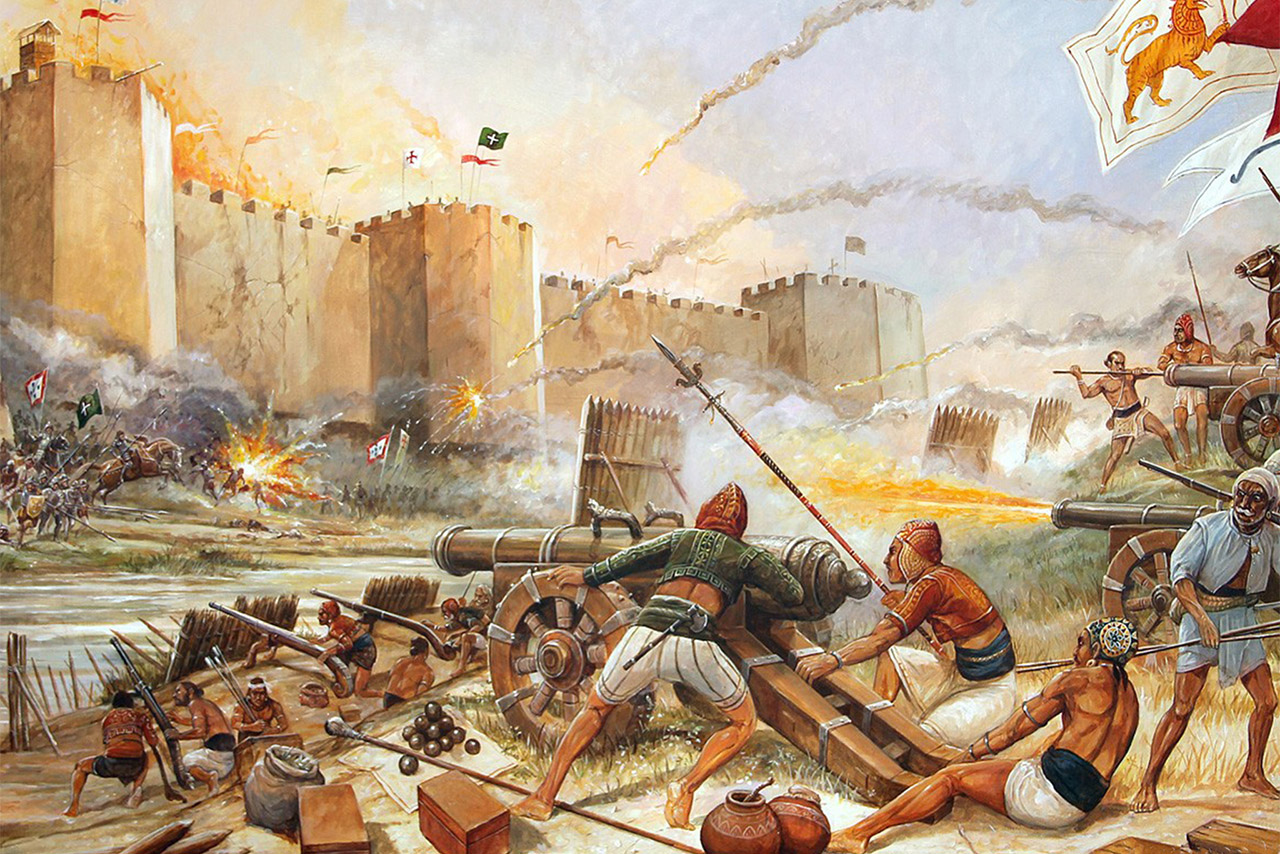
The Dutch Period
The Dutch became involved in the politics of the Indian Ocean in the beginning of the seventeenth century. Headquartered at Batavia in modern Indonesia, the Dutch moved to wrest control of the highly profitable spice trade from the Portuguese. The Dutch began negotiations with King Rajasinha (II) of Kandy in 1638. A treaty assured the king assistance in his war against the Portuguese in exchange for a monopoly of the island’s major trade goods, particularly cinnamon. Rajasinha also promised to pay the Dutch’s war-related expenses. The Portuguese fiercely resisted the Dutch and the Kandyans and were expelled only gradually from their strongholds. The Dutch captured the eastern ports of Trincomalee and Batticaloa in 1639 and restored them to the Sinhalese. But when the southwestern and western ports of Galle and Negombo fell in 1640, the Dutch refused to turn them over to the king of Kandy. The Dutch claimed that Rajasinha had not reimbursed them for their vastly inflated claims for military expenditures.
This pretext allowed the Dutch to control the island’s richest cinnamon lands. The Dutch ultimately presented the king of Kandy with such a large bill for help against the Portuguese that the king could never hope to repay it. After extensive fighting, the Portuguese surrendered Colombo in 1656 and Jaffna, their last stronghold, in 1658. Superior economic resources and greater naval power enabled the Dutch to dominate the Indian Ocean. They attacked Portuguese positions throughout South Asia and in the end allowed their adversaries to keep only their settlement at Goa.
The king of Kandy soon realized that he had replaced one foe with another and proceeded to incite rebellion in the lowlands where the Dutch held sway. He even attempted to ally the British in Madras in his struggle to oust the Dutch. These efforts ended with a serious rebellion against his rule in 1664. The Dutch profited from this period of instability and extended the territory under their control. They took over the remaining harbors and completely cordoned off Kandy, thereby making the highland kingdom landlocked and preventing it from allying itself with another foreign power. This strategy, combined with a concerted Dutch display of force, subdued the Kandyan kings. Henceforth, Kandy was unable to offer significant resistance except in its internal frontier regions. The Dutch and the Kingdom of Kandy eventually settled down to an uneasy modus vivendi, partly because the Dutch became less aggressive. Despite underlying hostility between Kandy and the Dutch, open warfare between them occurred only once in 1762 when the Dutch, exasperated by Kandy’s provocation of riots in the lowlands, launched a punitive expedition. The expedition met with disaster, but a better planned second expedition in 1765 forced the Kandyans to sign a treaty that gave the Dutch sovereignty over the lowlands. The Dutch, however, maintained their pretension that they administered the territories under their control as agents of the Kandyan ruler.
After taking political control of the island, the Dutch proceeded to monopolize trade. This monopoly was at first limited to cinnamon and elephants but later extended to other goods. Control was vested in the Dutch East India Company, a joint-stock corporation, which had been established for the purpose of carrying out trade with the islands of Indonesia but was later called upon to exercise sovereign responsibilities in many parts of Asia.
The Dutch tried with little success to supplant Roman Catholicism with Protestantism. They rewarded native conversion to the Dutch Reformed Church with promises of upward mobility, but Catholicism was too deeply rooted. (In the 1980s, the majority of Sri Lankan Christians remained Roman Catholics.) The Dutch were far more tolerant of the indigenous religions than the Portuguese; they prohibited open Buddhist and Hindu religious observance in urban areas, but did not interfere with these practices in rural areas. The Dutch banned Roman Catholic practices, however. They regarded Portuguese power and Catholicism as mutually interdependent and strove to safeguard against the reemergence of the former by persecuting the latter. They harassed Catholics and constructed Protestant chapels on confiscated church property.
The Dutch contributed significantly to the evolution of the judicial, and, to a lesser extent, administrative systems on the island. They codified indigenous law and customs that did not conflict directly with Dutch-Roman jurisprudence. The outstanding example was Dutch codification of the Tamil legal code of Jaffna- -the Thesavalamai. To a small degree, the Dutch altered the traditional land grant and tenure system, but they usually followed the Portuguese pattern of minimal interference with indigenous social and cultural institutions. The provincial governors of the territories of Jaffnapatam, Colombo, and Trincomalee were Dutch. These rulers also supervised various local officials, most of whom were the traditional mudaliyar (headmen).
The Dutch, like the Portuguese before them, tried to entice their fellow countrymen to settle in Sri Lanka, but attempts to lure members of the upper class, especially women, were not very successful. Lower-ranking military recruits, however, responded to the incentive of free land, and their marriages to local women added another group to the island’s already small but established population of Eurasians–the Portuguese Burghers. The Dutch Burghers formed a separate and privileged ethnic group on the island in the twentieth century.
During the Dutch period, social differences between lowland and highland Sinhalese hardened, forming two culturally and politically distinct groups. Western customs and laws increasingly influenced the lowland Sinhalese, who generally enjoyed a higher standard of living and greater literacy. Despite their relative economic and political decline, the highland Sinhalese were nonetheless proud to have retained their political independence from the Europeans and thus considered themselves superior to the lowland Sinhalese.
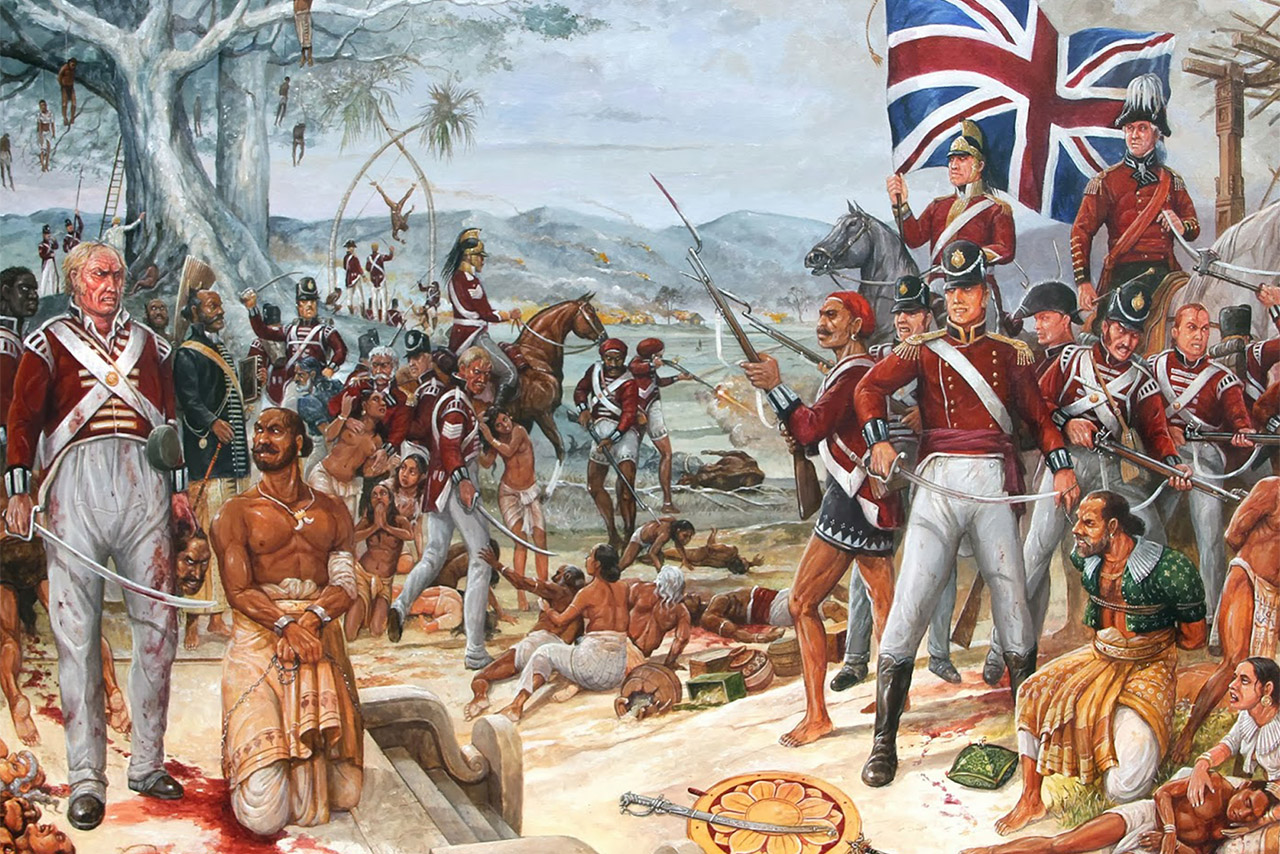
The British Period
By the mid-eighteenth century, it was apparent that the Mughal Empire (1526-1757) in India faced imminent collapse, and the major European powers were positioning themselves to fill the power vacuum in the subcontinent. Dutch holdings on Sri Lanka were challenged in time by the British, who had an interest in the excellent harbor at Trincomalee. After skirmishing with both the Dutch and French, the British took Trincomalee in 1796 and proceeded to expel the Dutch from the island. In 1766 the Dutch had forced the Kandyans to sign a treaty, which the Kandyans later considered so harsh that they immediately began searching for foreign assistance in expelling their foes. They approached the British in 1762, 1782, and 1795. The first Kandyan missions failed, but in 1795, British emissaries offered a draft treaty that would extend military aid in return for control of the seacoast and a monopoly of the cinnamon trade. The Kandyan king unsuccessfully sought better terms, and the British managed to oust the Dutch without significant help in 1796.
The Kandyans’ search for foreign assistance against the Dutch was a mistake because they simply replaced a relatively weak master with a powerful one. Britain was emerging as the unchallenged leader in the new age of the Industrial Revolution, a time of technological invention, economic innovations, and imperialist expansion. The nations that had launched the first phase of European imperialism in Asia–the Portuguese and the Dutch–had already exhausted themselves.
While peace negotiations were under way in Europe in 1796, the British assumed Sri Lanka would eventually be restored to the Dutch. By 1797 however, London had decided to retain the island as a British possession. The government compelled the British East India Company to share in the administration of the island and guaranteed the company a monopoly of trade, especially the moderately profitable–but no longer robust–cinnamon trade. The governor of the island was responsible for law and order, but financial and commercial matters were under the control of the director of the East India Company. This system of “dual control” lasted from 1798 to 1802. After the Dutch formally ceded the island to the British in the 1801 Peace of Amiens, Sri Lanka became Britain’s first crown colony.
Kandyan headmen and the British signed a treaty known as the Kandyan Convention in March 1815. The treaty decreed that the Kandyan provinces be brought under British sovereignty. In general, the old system was allowed to continue, but its future was bleak because of the great incongruity between the principles on which the British administration was based and the principles of the Kandyan hierarchy. Troubled by the corresponding decline in their status, the monks began to stir up political and religious discontent among the Kandyans almost immediately following the British annexation. The popular and widespread rebellion that followed was suppressed with great severity. When hostilities ended in 1818, the British issued a proclamation that brought the Kandyan provinces under closer control. With the final British consolidation over Kandy, the country fell under the control of a single power–for the first time since the twelfth-century rule of Parakramabahu I and Nissankamalla.
When the British first conquered the maritime provinces of Sri Lanka, the indigenous population of the island was estimated at only 800,000. When the British left a century and a half later, the population had grown to more than 7 million. Over a relatively short period, the island had developed an economy capable of supporting the burgeoning population. Roads, railways, schools, hospitals, hydroelectric projects, and large well operated agricultural plantations provided the infrastructure for a viable national economy.
In the mid-1830s, the British began to experiment with a variety of plantation crops in Sri Lanka, using many of the technological innovations developed earlier from their experience in Jamaica. Within fifteen years, one of these crops, coffee, became so successful that it transformed the island’s economy from reliance upon subsistence crops to plantation agriculture. Tea replaced coffee in later years.
In Sri Lanka as in India, the British created an educated class to provide administrative and professional services in the colony. By the late nineteenth century, most members of this emerging class were associated directly or indirectly with the government. Increased Sri Lankan participation in government affairs demanded the creation of a legal profession; the need for state health services required a corps of medical professionals; and the spread of education provided an impetus to develop the teaching profession. In addition, the expansion of commercial plantations created a legion of new trades and occupations: landowners, planters, transport agents, contractors, and businessmen. Certain Sinhalese caste groups, such as the Karava and Salagama, benefited from the emerging new economic order, to the detriment of the traditional ruling cultivators (Goyigama).
The development of a capitalist economy forced the traditional elite–the chiefs and headmen among the low-country Sinhalese and the Kandyan aristocracy–to compete with new groups for the favors of the British. These upwardly mobile, primarily urban, professionals formed a new class that transcended divisions of race and caste
The period of independence (1948 – 1972)
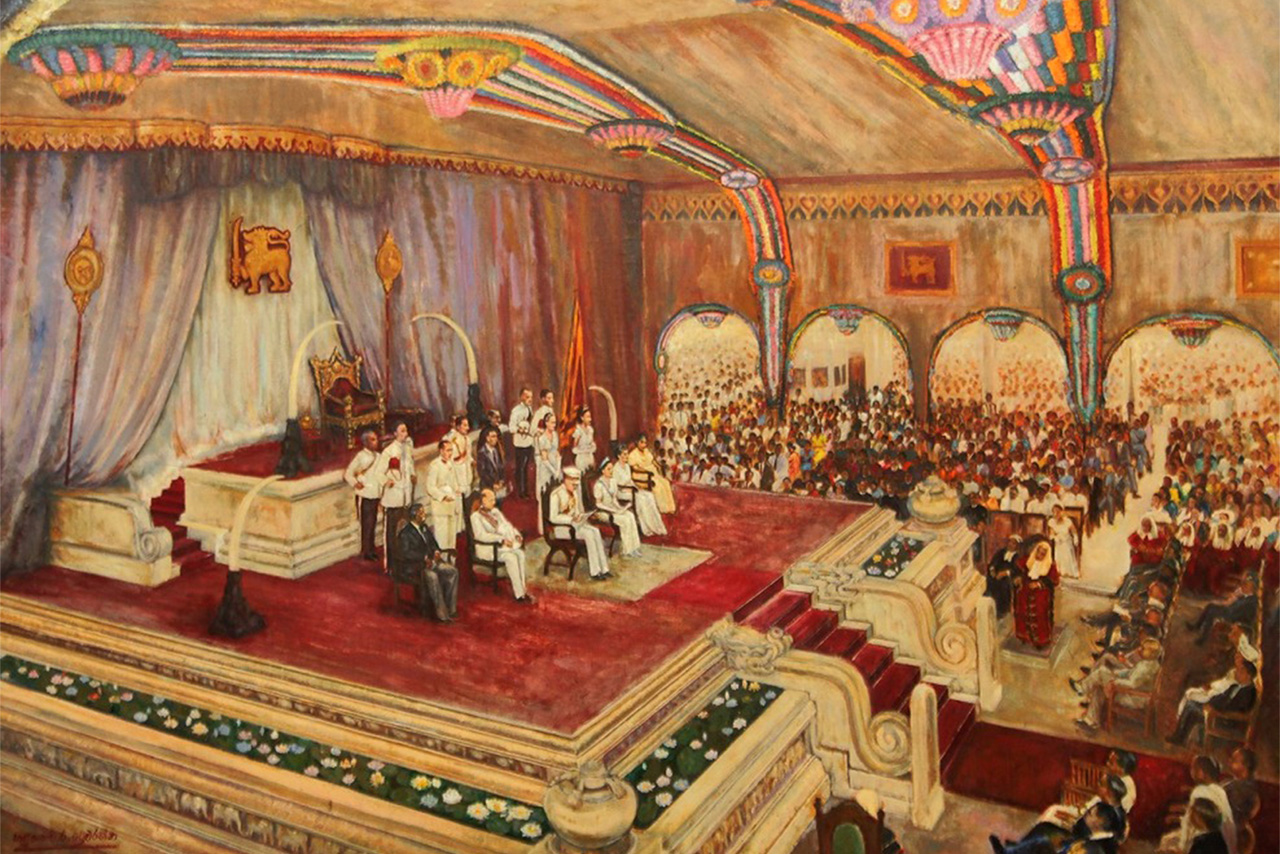
Following World War II, public pressure for independence increased. British Ceylon achieved independence on 4 February 1948, with an amended constitution taking effect on the same date. Military treaties with the United Kingdom preserved intact British air and sea bases in the country; British officers also continued to fill most of the upper ranks of the Army. Don Senanayake became the first Prime Minister of Ceylon. Later in 1948, when Ceylon applied for United Nations membership, the Soviet Union vetoed the application. This was partly because the Soviet Union believed that the Ceylon was only nominally independent, and the British still exercised control over it because the white, educated elite had control of the government. In 1949, with the concurrence of the leaders of the Sri Lankan Tamils, the UNP government disenfranchised the Indian Tamil plantation workers.
In 1950, Ceylon became one of the original members of the Colombo Plan, and remains a member to this day as Sri Lanka.
Don Senanayake died in 1952 after a stroke and he was succeeded by his son Dudley. However, in 1953 – following a massive general strike or ‘Hartal’ by the leftist parties against the UNP – Dudley Senanayake resigned. He was followed by John Kotelawala, a senior politician and an uncle of Dudley. Kotelawala did not have the personal prestige or the political acumen of D. S. Senanayake. He brought to the fore the issue of national languages that D. S. Senanayake had suspended. In 1956 the UNP was defeated at elections by the Mahajana Eksath Peramuna, which included the Sri Lanka Freedom Party (SLFP) led by Solomon Bandaranaike and the Viplavakari Lanka Sama Samaja Party of Philip Gunawardena. Bandaranaike was a politician who had fostered the Sinhala nationalist lobby since the 1930s. He replaced English with Sinhalese as the official language. He was the chief Sinhalese spokesmen who attempted to counter the communal politics unleashed by G. G. Ponnambalam.The bill was known as the Sinhala Only Bill, and also made Sinhalese the language taught in schools and universities. This caused Tamil riots, as they spoke the Tamil language and it had not been recognized as an official language. These riots culminated in the assassination of the Prime Minister, Bandaranaike. His widow, Sirimavo, succeeded her husband as leader of the SLFP and was elected as the world’s first female prime minister. In 1957 British bases were removed and Sri Lanka officially became a “non-aligned” country. The Paddy Lands Act, the brainchild of Philip Gunawardena, was passed, giving those working the land greater rights vis-a-vis absentee landlords.
Elections in July saw Sirimavo Bandaranaike become the world’s first elected female head of government. Her government avoided further confrontations with the Tamils, but the anti-communist policies of the United States Government led to a cut-off of United States aid and a growing economic crisis. After an attempted coup d’état by mainly non-Buddhist right-wing army and police officers intent on bringing the UNP back to power, Bandaranaike nationalized the oil companies. This led to a boycott of the country by the oil cartels, which was broken with aid from the Kansas Oil Producers Co-operative.
In 1962, under the SLFP’s radical policies, many Western business assets were nationalized. This caused disputes with the United States and the United Kingdom over compensation for seized assets. Such policies led to a temporary decline in SLFP power, and the UNP gained seats in Congress. However, by 1970, the SLFP were once again the dominant power.
In 1964 Bandaranaike formed a coalition government with the LSSP, a Trotskyist party with Dr N.M. Perera as Minister of Finance. Nonetheless, after Sirimavo failed to satisfy the far-left, the Marxist People’s Liberation Front attempted to overthrow the government in 1971.
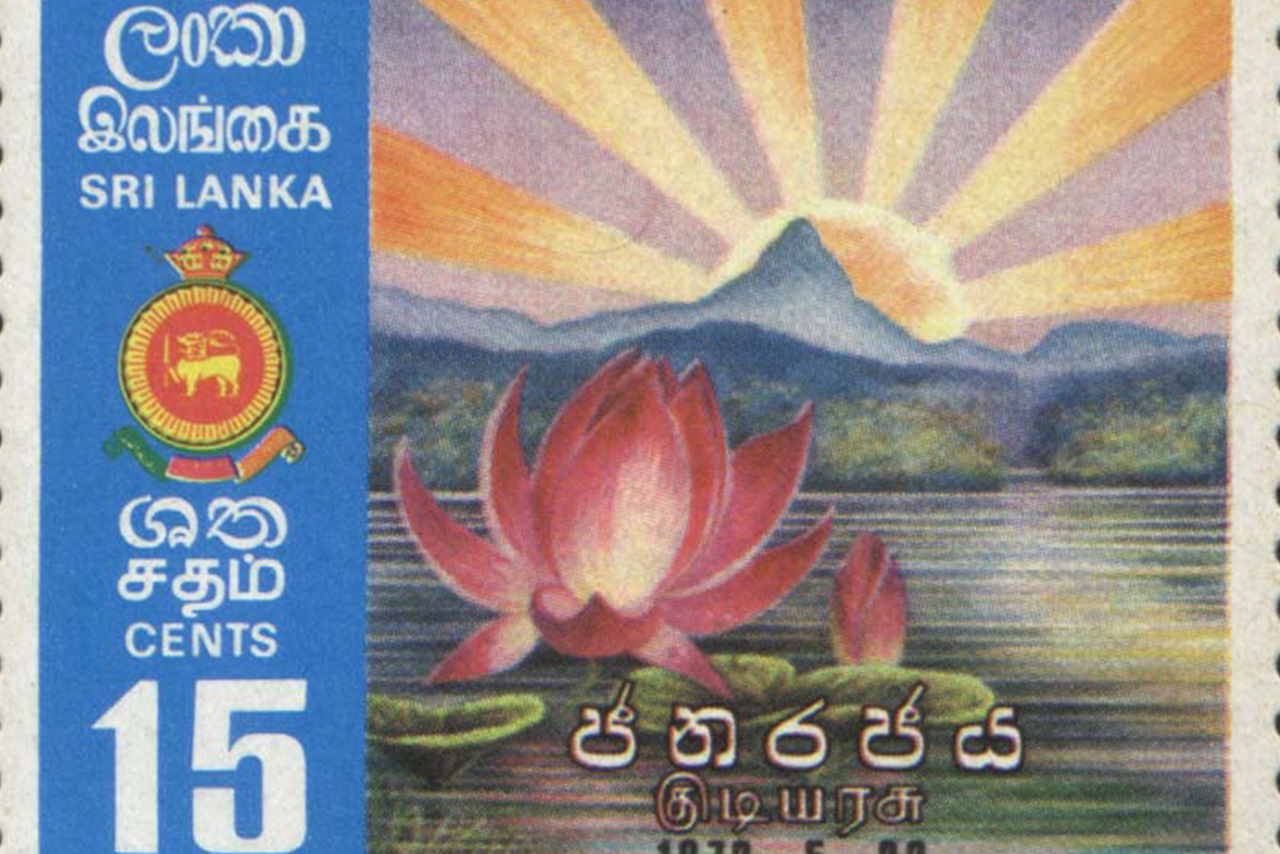
The rebellion was put down with the help of British, Soviet, and Indian aid in 1972, and later in 1972 the current constitution was adopted and the name of the country was changed to Sri Lanka. In 1972, the country officially became a republic, and its status in the Commonwealth was changed to a republic within the Commonwealth.
Republic Period of Sri Lanka (1972-2005)
Sirimavo Bandaranaike, the widow of late S. W. R. D. Bandaranaike, took office as prime minister in 1960, and withstood an attempted coup d’état in 1962. During her second term as prime minister, the government instituted socialist economic policies, strengthening ties with the Soviet Union and China, while promoting a policy of non-alignment. In 1971, Ceylon experienced a Marxist insurrection, which was quickly suppressed. In 1972, the country became a republic named Sri Lanka, repudiating its dominion status. Prolonged minority grievances and the use of communal emotionalism as an election campaign weapon by both Sinhalese and Tamil leaders abetted a fledgling Tamil militancy in the north during the 1970s. The policy of standardization by the Sirimavo government to rectify disparities created in university enrolment, which was in essence an affirmative action to assist geographically disadvantaged students to obtain tertiary education, resulted in reducing the proportion of Tamil students at university level and acted as the immediate catalyst for the rise of militancy.
The assassination of Jaffna Mayor Alfred Duraiyappah in 1975 marked a crisis point.
The Government of J. R. Jayawardene swept to power in 1977, defeating the largely unpopular United Front government. Jayawardene introduced a new constitution, together with a free market economy and a powerful executive presidency modelled after that of France. It made Sri Lanka the first South Asian country to liberalize its economy. Beginning in 1983, ethnic tensions were manifested in an on-and-off insurgency against the government by the Liberation Tigers of Tamil Eelam (LTTE). Following the riots in July 1983, more than 150,000 Tamil civilians fled the island, seeking asylum in other countries. Lapses in foreign policy resulted in strengthening the Tigers by providing arms and training. In 1987, the Indo-Sri Lanka Accord was signed and the Indian Peace Keeping Force (IPKF) was deployed in northern Sri Lanka to stabilize the region by neutralizing the LTTE. The same year, the JVP launched its second insurrection in Southern Sri Lanka, necessitating redeployment of the IPKF in 1990. In 2002, the Sri Lankan government and LTTE signed a Norwegian-mediated ceasefire agreement.
The Tamil Tigers bomb the sacred Sri Dalada Maligawa temple resulting in 17 deaths.
The 2004 Asian tsunami killed over 35,000 in Sri Lanka. From 1985 to 2006, Sri Lankan government and Tamil insurgents held four rounds of peace talks without success. Both LTTE and the government resumed fighting in 2006, and the government officially backed out of the ceasefire in 2008. In 2009, under the Presidency of Mahinda Rajapaksa the Sri Lanka Armed Forces defeated the LTTE, and re-established control of the entire country by the Sri Lankan Government. Overall, between 60,000 and 100,000 people were killed during the 26 years of conflict.
40,000 Tamil civilians may have been killed in the final phases of the Sri Lankan civil war, according to an Expert Panel convened by U.N. Secretary General Ban Ki-moon. The exact number of Tamils killed is still a speculation that needs further study. Following the LTTE’s defeat, the Tamil National Alliance, the largest Tamil political party in Sri Lanka, dropped its demand for a separate state in favor of a federal solution. The final stages of the war left some 294,000 people displaced. According to the Ministry of Resettlement, most of the displaced persons had been released or returned to their places of origin, leaving only 6,651 in the camps as of December 2011. In May 2010, President Rajapaksa appointed the Lessons Learnt and Reconciliation Commission (LLRC) to assess the conflict between the time of the ceasefire agreement in 2002 and the defeat of the LTTE in 2009.Sri Lanka has emerged from its 26-year war to become one of the fastest growing economies of the world.
Post-conflict history of Sri Lanka is the ended on 19 May 2009
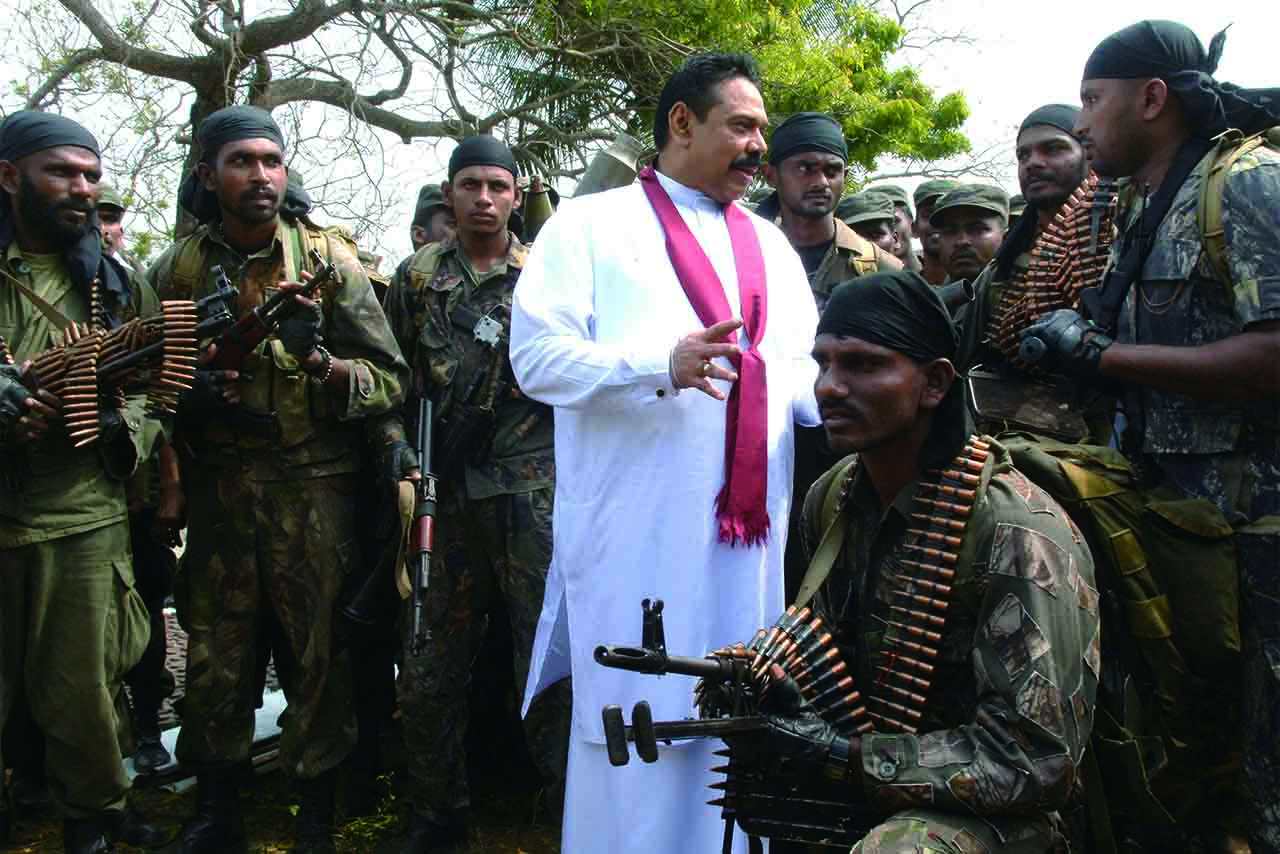
Post-conflict history of Sri Lanka is the history of Sri Lanka from the end of the Sri Lankan Civil War, in 2009, to the present. Officially the war ended on the 19 May 2009, when the President Mahinda Rajapaksa addressed Parliament and declared victory and liberation from terrorism. Many developments have come from the end of the war such as the Tamil National Alliance, the largest Tamil political party in Sri Lanka dropping its demand for a separate state and the peace dividend allowing Sri Lanka to become one of the fastest growing economies of the world. The Sri Lankan government is now in the process of rebuilding war torn areas and development of the nation as a whole. Sri Lankan government declaration of total victory on 16 May 2009 marked the end of the 26-year-long civil war. President Mahinda Rajapaksa, while attending the G11 summit in Jordan, addressed the summit stating “my government, with the total commitment of our armed forces, has in an unprecedented humanitarian operation finally defeated the LTTE militarily”.
However the fighting continued for a couple of days thereafter. On the same day, Sri Lankan troops killed 70 rebels attempting to escape by boat, as the last LTTE strongpoints crumbled. The whereabouts of LTTE leader Vellupillai Prabhakaran and other major rebel leaders were not certain at the time. On 17 May 2009, Selvarasa Pathmanathan, the LTTE chief of international relations, admit the organization’s defeat stating “This battle has reached its bitter end … We have decided to silence our guns. Our only regrets are for the lives lost and that we could not hold out for longer”.
On May 18, 2009 Velupillai Prabhakaran was erroneously claimed to be killed by the Sri Lankan armed forces. It was claimed that on the morning of that day, he was killed by gunfire, while trying to escape the conflict zone in an ambulance with his closest aides. State television announced that the military had surrounded Prabhakaran in a tiny patch of jungle in the north-east. The Daily Telegraph wrote that, according to Sri Lankan TV, Prabhakaran was “… killed in a rocket-propelled grenade attack as he tried to escape the war zone in an Ambulance. Colonel Soosai, the leader of his “Sea Tigers” navy, and Pottu Amman, his intelligence chief were also killed in the attack.” 19 May 2009 saw President Mahinda Rajapaksa giving a victory speech to the Parliament and declared that Sri Lanka is liberated from terrorism. Around 9:30 a.m., the same day, troops attached to Task Force VIII of Sri Lanka Army, reported to its commander, Colonel G.V. Ravipriya that a body similar to Velupillai Prabhakaran has been found among the mangroves in Nandikadal lagoon.
Former Commander of the Army Sarath Fonseka officially announced Prabhakaran’s death on the State television ITN. Later, his body was shown on Swarnavahini for the first time, while the identity was confirmed by Karuna Amman, his former confidant. DNA tests against his son, who had been killed earlier by the Sri Lanka Military, also confirmed the death.Prabakaran’s identity was however, contradicting the government claims, Selvarasa Pathmanathan on the same day claimed that “Our beloved leader is alive and safe.” But finally on the 24 May 2009, he admitted the death of Prabhakaran, retracting the previous statement.The Sri Lankan military effectively concluded its 26 year operation against the LTTE, its military forces recaptured all remaining LTTE controlled territories in the Northern Province.
The Sri Lankan civil war cost the lives of an estimated 80,000–100,000 people. This included more than 23,327 Sri Lankan soldiers and policemen, 1,155 Indian soldiers and 27,639 Tamil fighters. The numbers were confirmed by Secretary of Defence Ministry Gotabhaya Rajapaksa in an interview with state television on 22 May 2009. 23,790 Sri Lankan military personnel were killed since 1981 (it was not specified if police or other non-armed forces personnel were included in this particular figure). From the August 2006 recapture of the Mavil Aru reservoir until the formal declaration of the cessation of hostilities (on May 18), 6261 Sri Lankan soldiers were killed and 29,551 were wounded. The Sri Lankan military estimates that up to 22,000 LTTE militants were killed in the last three years of the conflict.While Gotabhaya Rajapaksa confirmed that 6,261 personnel of the Sri Lankan Armed Forces had lost their lives and 29,551 were wounded during the Eelam War IV since July 2006. Brigadier Udaya Nanayakkara added that approximately 22,000 LTTE fighters had died during this time.
Following the LTTE’s defeat, Tamil National Alliance, the largest political party in Sri Lanka dropped its demand for a separate state, in favour of a federal solution. Sri Lanka, emerging after a 26-year war, has become one of the fastest growing economies of the world.
Presidential elections were completed in January 2010. Mahinda Rajapaksa won the elections with 59% of the votes, defeating General Sarath Fonseka who was the united opposition candidate.
Under Mahinda Rajapaksa large infrastructure projects and Mega projects such as the Magampura Mahinda Rajapaksa Port were carried out. Large hydro power projects as well as coal powered power plants like the Sampur and Norocholai Power Stations and Sustainable power stations such as the Hambantota Solar Power Station were also built to supply the rising need for power in the country. By 2010 Sri Lanka’s poverty rate was 8.9% while it was 15.2% in 2006.Sri Lanka also made it into the “high” category of the Human Development Index during this time.
However the government came under fierce criticism for corruption and Sri Lanka ranked 79 from among 174 countries in the Transparency International corruption index.
In 2014 November Mahinda Rajapksa called for early elections as signs of declining public support started to appear. Taking the chance the General Secretary of the ruling Sri Lanka Freedom Party and Health minister Maithripala Sirisena defected and said he would contest President Mahinda Rajapaksa at the upcoming presidential election. He was backed by the former president Chandrika Kumaratunga, UNP and its leader Ranil Wickremesinghe, Jathika Hela Urumaya as well as Sarath Fonseka. In his speech he promised to end Thuggery, embezzlement, crime, drug mafia, nepotism and corruption. The largest Muslim party of Sri Lanka also left the government and joined Maithripala.
In Sri Lankan presidential election, 2015 in January Maithripala won the election with 51.28% of the votes and took oath as president.
Sri Lanka was ruled by 181 Kings and Queens from the Anuradhapura to Kandy periods.
The history of Sri Lanka
The history of Sri Lanka begins around 30,000 years ago. Chronicles, including the Mahawansa, the Dipavamsa, the Culavamsa and the Rajaveliya, record events from the beginnings of the Sinhalese monarchy in the 6th century BC, the Tamil Elara (monarch) in the 2nd century BC; through the arrival of European Colonialists in the 16th century; and to the disestablishment of the monarchy in 1815. Some mentions of the country are found in the Ramayana, the Mahabharata and the Lankavatara Sutra Mahayana Buddhism texts of Gautama Lord Buddha’s teachings. Buddhism was introduced in the 3rd century BC by Arhath Mahinda (son of the Indian emperor Ashoka the Great).
History of Sri Lanka
Шри Ланка – страна загадок и легенд. До сих пор никто не может объяснить всего, что было найдено в ходе раскопок на территории острова. Однако в одном мнении сходятся ученые – здесь была древняя цивилизация, которая обладала особыми знаниями, способностями, а остатки ее культуры и построек находят до сих пор.
Доисторический период -1000 – 543 гг. до н.э
Около 10 века до н.э. на Шри Ланке жили четыре племени, которые имели арийские корни. Одно из них называлось Ракша и люди этого племени поклонялись своим богам Ракшасам. В известной Индийской хронике «Рамаяна» демон Равана, который был королем Шри Ланки, принадлежал к племени Ракша. Он обладал летательным аппаратом, носящим название «Данду Монара», на котором Равана перелетел в Индию и похитил принцессу Ситу, невесту индийского принца Рамы. По легенде в районе Вирапола находился аэропорт Ракшасов. Существуют различные мнения о том, где же была укрыта принцесса. Одни утверждают, что Равана спрятал Ситу в горном районе Нувара Элии, где сейчас построен священный Ковил Хануману — обезьяне, которых Рама послал на поиски своей невесты. Однако после проведения раскопок, некоторые историки говорят о том, что местом, где была укрыта Сита, являлась крепость Сигирия. Даже многие современники, видя Сигирию, или пролетая над ней на вертолете, говорят, что это место невероятной силы, хранящее в себе великую загадку человечества.
Второй народ носил название Нага и поклонялся змеям. До настоящего времени дошли легенды, сохранившиеся в народных танцах и искусстве масок, когда змей и народ их укрощавший призывали на помощь для защиты от врагов. Келания и Нагадипа были одними из самых популярных городов и являлись сосредоточением торговых путей, ведь по преданиям Нага являлись одними из величайших торговцев того времени.
Третье племя, населявшее Шри Ланку в древности, называлось Дева, и поклонялись они единому Богу. Четвертый и один из самых могущественных народов носил название Якша, поклонявшийся дьяволу, или невиданным способностям человека. По легенде, Якша могли становиться невидимыми, летать по воздуху. Якша первыми стали строить водохранилища, а так же изобрели ирригационную систему подачи воды для фонтанов, орошения посевов и других нужд. Первая дамба была найдена в районе Мадуру Оя. Ей насчитывается более 6000 лет. Удивительная история сопровождает обнаружение этой постройки. Дело в том, что уже в современное время властями Шри Ланки было принято решение построить дамбу именно в этом районе. Современные разработчики использовали множество снимков из космоса, специальные приборы, которые указывали наиболее точное и благоприятное место для строительства плотины. И вот когда работы были начаты, обнаружилось, что уже много тысячелетий назад древние люди строили в этом же самом месте дамбу. Однако, сразу возникает вопрос, как было возможно не имея ни компьютерных технологий, ни космических исследований рассчитать один в один место, наиболее благоприятное для строительства плотины.
Как вы знаете, народ Шри Ланки называется сингальцами. Говорят,
Принц Виждая – 543 – 505 гг. до н.э.
В 6 веке до н.э. группа выходцев из Восточной Индии (территория современного Бангладеша) в составе 700 человек под предводительством принца Виджая появилась на острове. Виджая был сынов короля Синхабаху, правившего территорией Лата. С Виджая связана еще одна легенда, объясняющая, почему население страны называется сингальцами — в буквальном переводе «детьми льва». Дело в том, что в жилах принца на четверть текла львиная кровь: его бабушку, принцессу Североиндийского царства, похитил влюбленный в нее лев, и папа принца стал львом ровно наполовину. Так вот Синха по Ланкийски значит лев. Эта легенда объясняет, почему лев присутствует и на всех государственных регалиях страны. Виджая взял в жены принцессу Кувейни из местного племени Якша, правившего Шри Ланкой в тот момент.
Она помогала Виджая убить короля Якша и придворных короля, проживавших в регионе Ланкапурая. Получив власть на острове, Виджая построил город в регионе Тамманава, места сосредоточения власти Якша. У принца Виджая и принцессы Кувейни родились сын Джавахатта и дочь Дисала. Население страны требовало, чтобы Виджая стал полноправным королем Шри Ланки, однако принц с большой неохотой шел на этот шаг. По древним законам Индии перед вступление на престол будущий король должен был быть женат на принцессе королевских кровей. Поэтому, чтобы стать более значимым правителем, Виджая не колеблясь, изгнал Кувейни с двумя детьми и взял в жены настоящую принцессу с полуострова Индостан. Вернувшись домой в Ланкапурая, принцесса Кувейни была убита своим народом за предательство. Двое детей принца Виджая и Кувейни исчезли и через некоторое время появились на горе Пик Адама и именно они основали древнее племя Веддов, до сих пор проживающее в Шри Ланке.
Виджая правил своим королевством 38 лет. Однако законных наследников на его трон не было, и принц послал за своим младшим братом, принцем Сумиттой, в Индию. К тому времени как делегация из Шри Ланки достигла берегов Индии, Сумитта уже стал королем в своей стране и отправил вместо себя младшего сына Пандувас Дева править Шри Ланкой. Пока делегаты ездили из Шри Ланки в Индию, король Виджая умер, и страной в течение одного года правил премьер-министр Упатисса (505 – 504 гг. до н.э.).
Законный наследник и младший сын брата короля Виджая принц Пандувас Дев правил страной 30 лет (504 – 474 гг. до н.э.). У него было 10 сыновей и одна дочь, знаменитая принцесса Унмада Читра. Он построил первое в стране водохранилище Абая Вева.
Период Анурадхапуры 437 г. до н.э. 985 г. н.э.
Был среди 700 сопровождавших Виджая последователей человек по имени Анурадха, который основал небольшое селение. Так как он являлся министром, то деревню назвали в его честь, а со временем маленькое поселение превратилось в большой город, переименованный в Анурадхапуру.
Однако период, когда Анурадхапура стала столицей сингальского королевства, начался с сына королевы Унмада Читра, короля Пандукабая (437 – 367 гг. до н.э.). Это был первый король, рожденный на Шри Ланке. Он превратил Анурадхапуру в хорошо развитый, красивый город, разбив парки, построив систему канализации и водоснабжения, дворцы, а так же кладбище для умерших.
Правители сменяли друг друга, боролись за власть, но одним из самых значимых правителей того времени был король Деванампиятисса (307 – 267 гг. до н.э.). Король был в хороших отношениях с индийским императором Ашокой, который как благословение послал в Шри Ланку своего сына Махинду во главе Буддистской миссии. Деванампиятисса благоволил к Буддизму, и это учение получило широкое распространение на Шри Ланке, было выстроено много храмов и огромных ступ. Позже на Шри Ланку приехала дочь императора Ашоки, принцесса Сангхамитта и привезла ветвь священного дерева Бодхи, под которым Будда получил просветление. Сегодня это самое старое дерево на планете.
Анурадхапура была очень уязвимым городом для индийских захватчиков. Она постоянно подвергалась нападениям и периодически находилась под их влиянием. Одним из таких индийских правителей был тамильский принц Элара, пришедший из Южной Индии. Ему удалось удерживать власть на острове в течение 44 лет. В это же время у короля Кавантиссы, правившего южной провинцией Шри Ланки в городе Магама, родился сын Дутугамуну. Позже, когда маленький принц вырос, он решил изгнать индийских захватчиков из Шри Ланки. Около 15 лет длилось его противостояние с принцем Эларой. Однако победа была за Дутугамуной, который стал одним из самых значимых правителей острова (161 – 137 гг. до н.э.) и главным героем знаменитой исторической хроники Шри Ланки «Махавамса». Его достижения поистине огромны. Много сделал он для развития и становления Буддизма на Шри Ланке. Дутугамуну построил 99 храмов, сам лично проповедовал Буддистское учение и платил ежемесячную зарплату людям, проповедовавшим его, три раза он давал всем монахам одежду и чашу для еды. В течение 28 лет ежемесячно в день полной луны (Поя) все храмы были празднично освещены огнями, а сам он лично зажег 12 000 масляных ламп. Король выделял много средств на благотворительность, построил 18 госпиталей в Шри Ланке и обеспечил их всем необходимым. Он отправлял молочный рис, карри, мед нуждавшимся, обеспечивал одеждой всех нуждающихся акушерок, дававших жизнь младенцам. 33 раза он делал гигантские пожертвования для всей страны. Так же он заботился о буйволах, тяжело работавших на полях, давая им мед, смешанный с соломой для восстановления сил. Дутугамуну создал судебную систему, а так же построил огромное количество водохранилищ, что способствовало развитию сельского хозяйства Шри Ланки.
После Дутугамуну к власти пришел его брат Саддатисса (137 – 119 гг. до н.э.), который продолжил начинания своего предшественника в области развития сельского хозяйства и строительства храмов.
В 103 году до н.э. на трон Шри Ланки взошел наследник короля Датугамуну, принц Валагамба. Однако через пять месяцев его правления на Шри Ланку пришли индийские завоеватели, и королю пришлось бежать, бросив свою семью. Около 14 лет скрывался свергнутый король в пещерах у монахов, собирая войско. В 89 году до н.э. Валагамба победил южноиндийских захватчиков, вернув себе трон. В благодарность за поддержку, он подарил монахам пещеры Дамбуллы, которые сделал храмом, расписав их своды. При нем же была написана Трипитакая – книга об основах Буддистского учения.
Затем следует период раздробленности. Множество кролей и королев сменяли друг друга. Однако только королю Васабха удалось принести мир и покой в страну за период его долгого правления (67 – 111 гг. н. э.). Король строил гигантские водохранилища, а так же вырыл 12 каналов. Кроме этого он первый построил подземную систему каналов на Шри Ланке.
Сын короля Васабха, Гаджаба I, после восшествия на трон организовал поход в южную Индию для освобождения 12 000 пленных, захваченных во время набегов при правлении его отца. В качестве отмщения он взял 12 000 пленных с собой на Шри Ланку.
Еще одним из значимых правителей после Гаджабы был царь Махасена (334 – 362 гг. н.э.). В тот период времени трения и споры между последователями ветви буддистского учения тхеравады (узкий путь к спасению, предназначенный только для монахов) и махаяны (широкий путь направленный на спасение и помощь всем живым существам независимо от их личных качеств) достигли своего апогея. Махасена был сторонником течения махаяны и основал для е пследователей монастырь Джетавана в Полоннаруве, а Махавихара пришла в упадок. Махасена еще носил имя Бог Миннерии за его заслуги в развитии сельского хозяйства и строительство огромного искусственного озера-водохранилища Миннерия.
Сын Махасены, царь Сиримегхавана (362 – 380 гг. н.э.), вошел в историю как правитель, при котором из Индии был доставлен на Шри Ланку Зуб Будды в 371 году. Он приказал отлить статую Махинды (сына царя Ашоки привезшего Буддизм на Шри ланку) и восстановить Махасену.
В период 5 веке н.э. Шри Ланка пребывала под властью Индийской династии Пандьев. Лишь королю Дхатусене (459 – 477 гг. н.э.), еще одного великого героя эпоса «Махавамса», удалось изгнать захватчиков из Анурадхапуры. Король построил множество храмов, но главной его заслугой стало строительство огромного водохранилища Келавева в Анурадхапуре.
Как написано в «Махавамсе», сын Дхатусены, принц Кассапа (477 – 495 гг. н.э.) в 477 году замуровал отца заживо в стене им же построенного водохранилища и захватил власть в Шри Ланке. Боявшись мести брата и народного гнева, Кассапа покинул Анурадхапуру и обосновался на знаменитой горе-крепости Сигирии, создав из нее 8 чудо света, которым восхищаются потомки. Однако после 18 лет правления он был побежден своим братом Могалланом, который вернул столицу в Анурадхапуру. Потомки Могаллана правили страной до начала 6 века н.э.
В 7-9 веках н.э. на острове был период практически 300 летнего правления Индийской династии Паллавов. Короли Шри Ланки всегда испытывали на себе их влияние и пользовались их поддержкой, находясь формально у власти.
Король Махинда V, взошедший на трон в 982 году, был последним правителем в Анурадхапуре. В 985 году на Шри Ланку из Индии пришла могущественная династия Чолов под предводительством императора Раджарая Великого, который захватил и разрушил Анурадхапуру. Король и все знатные люди убежали на юг острова в Рухуну, однако в 1017 году Чолы захватили Махинду в плен и бросили его в тюрьму, в которой он умер в 1029 году.
Период величия Анурадхапуры, продолжавшийся около 1500 лет закончился.
Период Полоннарувы -1065 – 1120 гг. н.э.
Эпоха влияния Полоннарувы началась в 1065 году, когда Чолы после разрушения Анурадхапуры перенесли столицу в Полоннаруву, которая находилась в центре острова, и ее было удобно оборонять от войск южно — сингалького царства. Кроме того территория вокруг города была очень благоприятна для сельского хозяйства. Полоннарува сама была основана конечно же намного раньше еще в 3 веке н.э., а в середине 4 века в городе была оборудована царская резиденция.
Шри Ланка оставалась провинцией Чолов целых 75 лет. В это время в стране возросло влияния индуизма, было построено много святилищ и храмов. Позднее царь Виджеябаху I (1070 – 1110 гг. н.э.), собрал свою армию и изгнал Чолов из Шри Ланки, освободив страну.
Виджеябаху I пришлось реставрировать как разрушенную Чолами Анурадхапуру, так и Полоннаруву, однако столицу в Анурадхапуру уже не вернули. Король построил много храмов, пагод, университет, в котором могло обучаться до 5000 человек. Король обладал великим даром политика и встроил хорошие отношения с Китаем и другими странами. В Полоннаруве было множество посольств иностранных государств, процветала торговля. При Виджеябаху возвели вокруг города высокую стену, покрыли ее штукатуркой и вырыли глубокий ров, а второй король Паракрамабаху эту главную стену окружил еще тремя. В результате город стал по площади в 4 раза больше Анурадхапуры. В общей сложности в Полоннаруве царствовало около 19 королей, из них было даже 2 королевы.
Следующим великим правителем, внесшим свой вклад в историю Шри Ланки, был король Паракрамабаху I (1164 -1186 гг. н.э.). Этому королю удалось примирить последователей двух буддистских течений Шри Ланки. Численность населения Полоннарувы при нем достигло 3 миллионов человек. Однако главной его заслугой стало строительство оросительной системы каналов и огромного водохранилища площадью 2500 га, которое носит название Паракрама Самудре, что в переводе с сингальского значит «Море Паракрамы», названного так в его честь. Король считал, что ни одна капля дождя, не должна быть унесена в океан, не послужив на пользу людям.
Третьим великим правителем Полоннарувы был король Нишшанкамалле (1187 – 1197 гг. н.э.). При нем еще 10 лет в стране царил мир. Король любил записывать все свои достижения, а так же при нем была создана Каменная Книга, которая является своеобразной конституцией того времени. При Ниссанкамалле была окончена система формирования каст и система заключения браков на Шри Ланке.
Однако, история Полоннарувы оказалась не такой долгой, как у Анурадхапуры. В 13 веке после смерти царя Ниссанкамалле начался упадок государства, и всего лишь в течение 20 лет город, остававшийся столицей Шри Ланки около 2 столетий, был заброшен и стал превращаться в руины.
В середине 13 века н.э. столицей сингальского государства стала Дамбадения, расположенная на дороге из Курунегалы в Негомбо. А после ее падения столица была перенесена в Япахуву. В результате раскопок были обнаружены остатки царского дворца, купален, лотосового бассейна, крепостных стен, а так же храма Зуба Будды. Вообще в Шри Ланке существовало поверье, что Зуб Будды приносит удачу и прозрение тому, кто им владеет. Поэтому священная реликвия всегда находилась в столице государства, для нее каждый правитель считал своим долгом построить храм образа со святилищем. При переносе столицы в другой город, Зуб Будды переезжал вместе с ней. Из Япахувы правили три царя, однако особого внимания заслуживает Паракрамабаху III (1278 – 1293 гг. н.э.), так как при его правлении индийцам удалось захватить крепость Япахуву и увезти Зуб Будды в Индию. Однако царь сумел вернуть священную реликвию обратно.
На смену Япахуве пришла эра Курунегалы (1293 – 1341 гг. н.э.). Само название Курунегала переводится как город слоновьего камня («куруне» — слон, а «гала» — камень). От самого города практически ничего не осталось, однако самое интересное находится в его окрестностях. Так, например, в период правления царя Дутугамуну было найдено месторождение серебра. И в честь этого события построен Серебрянный храм и в него помещена позолоченная статуя Будды.
Гампола пришла на смену Курунегале до начала 14 века н.э. Однако обстановка в стране была нестабильной. Последним сингальским королем единой Шри Ланки был Паракрамабаху VI (1413 – 1467 гг. н.э.). В течение 55 лет он правил страной из своей королевской резиденции в городе Котте. Однако после его смерти опять началась борьба за власть и усилилась феодальная раздробленность. Можно сказать, что отдельно на Шри Ланке существовало не менее 10 княжеств, однако самыми сильными из них были три: Канди – в центре острова, Котте – на юге и тамильское княжество Джафна — на севере. Но такая раздробленность и междоусобная борьба отвлекало внимание Ланкийцев от внешних притязаний других стран и народов, активно начавших свои колонизаторские набеги в начале 16 века.
Португальцы на Шри Ланке (1505 – 1658 гг.)
Впервые португальцы приплыли в Коломбо в 1505 г. и высоко оценили богатые ресурсы и стратегическое значение острова. Они вошли в договорные отношения с сингальским государем в Котте в 1518 г. Внутренние раздоры на острове позволили португальцам укрепить свои позиции на западном побережье. Благодаря превосходству во флоте и военной технике они преодолели сопротивление местного населения и захватили территорию государства Котте. Лишь в Канди сингалам удалось сохранить независимость. Сказались глубинное географическое положение этой области и упорное сопротивление кандийцев.
В 1619 г. португальцы покорили тамильское государство на полуострове Джаффна, так что под их контроль подпал весь остров, за исключением центральной части и районов на восточном побережье.
Португальские колониальные власти на Шри Ланке подчинялись вице-королю, резиденция которого находилась в Гоа (Индия). Основные административные структуры, унаследованные от сингалов, были сохранены. Высшие должности заняли португальцы, остальные – лояльные по отношению к колониальной администрации сингалы и тамилы. Торговля корицей и слонами была объявлена государственной монополией. Португальцы занялись также доходными коммерческими операциями с черным перцем и орехами арековой пальмы.
При португальцах активную деятельность развернули католические монахи. Францисканцы, иезуиты, доминиканцы и августинцы создали на острове свои миссии, которые получали значительную финансовую помощь от португальской администрации. Им часто отводились земли, принадлежавшие буддийским и индуистским храмам. Представители сингальской земельной аристократии переходили в христианство и при крещении брали португальские фамилии. Во многих приморских общинах на западе и севере произошло массовое обращение населения в католичество. В некоторых районах появились католические церкви и приходские школы. В верхних слоях туземного общества получил распространение португальский язык.
Португальская политика на острове имела не только локальное, но и гораздо более широкое значение. Именно здесь наблюдались важные перемены, свидетельствующие об изменениях принципиального характера в колониальной политике Португалии в XVI—XVII вв. в Азии и Африке. Если в первые десятилетия португальцы довольствовались эпизодическими набегами и единовременными акциями политического и экономического плана, то в середине XVI в. главным для португальцев было обеспечить себе существенно важные позиции в стратегически выгодных местах, взять в свои руки контроль над морской торговлей (пряностями, хлопковыми тканями, драгоценными камнями).
Остров же приобрел для португальцев особое значение не только как поставщик пряностей, жемчуга, драгоценных камней и экзотических животных (слонов). В Лиссабоне обратили самое серьезное внимание на то, что может быть главным богатством этой страны — стратегическое положение на главных морских путях.
Португальцы сначала оказывали помощь местным правителям против пиратов, но вместе с тем они усвоили тактику вмешательства в политическую борьбу, стремясь превратить этих властителей в своих марионеток.
Португальские власти обязались управлять территорией царства Котте согласно сингальским обычаям, а после присоединения Джаффны — также и согласно тамильским. Но в реальности они мало считались с местными традициями. Они считали себя наследниками сингальских правителей, т.е. единственными распорядителями всех обрабатываемых земель. Изучив архивы Котте (на пальмовых листьях), в которых перечислялись налоги и обязанности каждой деревни и хозяйства, они перевели их на португальский язык, используя кадастры сингальских правителей, проводили земельную перепись, сохранили старый сингальский налог на наследство. Португальцы обладали монопольным правом на обязательные поставки корицы, взимали поземельный налог, налоги с кокосовой и арековой пальм, перца, драгоценных камней, жемчуга, пойманных слонов.
Значительно обострили ситуацию на острове полученные португальцами в 1546 г. приказы из «центра» об уничтожении “языческих” храмов, идолов и пр. В результате XVII в. произошла серия религиозных восстаний, Но очаги их были разрозненными. К тому же на острове давно работали миссионеры, а ланкийцам импонировала пышность католического культа, уже сама по себе привлекавшая их внимание. В монастырских школах детей учили читать и писать на латыни, петь и играть на музыкальных инструментах. (Наиболее ярыми противниками португальской политики были жившие на побережье “мавры” — мусульмане (прежде всего, арабы), главные соперники португальцев на поприще торговли и в сфере миссионерской деятельности.) Вывозили они с острова корицу, а также живых слонов, слоновую кость, золото, драгоценные и полудрагоценные камни (сапфиры, рубины, аквамарины, топазы, гранаты, алмазы, турмалины, лунный камень, “кошачий глаз” и др.), жемчуг.
В средние века на острове особого расцвета достигло искусство резьбы по слоновой кости, особенно в так называемый “кандийский период”. В XVII в. государство Канди, возникшее в горах центральной части острова и сохранявшее независимость от европейских колонизаторов, стало одним из наиболее важных центров ланкийского ремесла. Ремесленники быстро перенимали достижения европейцев, в частности, оружейное дело.
Работавшие в дворцовых мастерских косторезы составляли одну из четырех группы ремесленников высокого статуса. Они проходили сложное обучение, и царь лично наделял каждого мастера землей за службу.
Помимо кандийского центра были и другие, располагавшиеся в Джаффне, Котте, Ситаваке и на юге острова.
В XVI в. с приходом португальцев произошло изменение типов изделий, так как теперь появились новые покупатели и заказчики из европейских стран. Таким образом, ремесло на Цейлоне приобрело новое качество — начался экспорт готовых изделий как светского, так и религиозного назначения. Более того, в изделиях, предназначенных для церкви, наблюдаются буддийские и индуистские мотивы. Иначе говоря, перед нами — начало синтеза двух культур — европейской (прежде всего, португальской) и восточной (прежде всего,ланкийской).
Португальцы вывозили украшения из драгоценных металлов, изделия, декорированные резьбой и интарсией (шкатулки, гребни, пеналы, рамы для зеркал, игольники, веера, сосуды и столовые приборы из золота и хрусталя), статуэтки и пр. предметы для шатцкаммер монархов и для нужд церкви. Новые материалы и вещи значительно разнообразили быт и образ жизни европейских королевских дворов, а впоследствии культуру и искусство народов Европы. С конца XVI в., например, в Европе вошли в моду цейлонские складные веера.
Лучших мастеров вывозили в Гоа и даже в Португалию. Любопытно, что на Цейлоне среди них были как тамилы, так и сингалы; национальная принадлежность ювелиров португальцев не интересовала.
Португальцы пробыли на острове сравнительно недолго – полтора века, затем их сменили голландцы, а тех — британцы. Однако еще полтора века спустя после ухода португальцев местные властители вели дипломатическую переписку с голландскими властями на португальском языке! Перечисляя факторы, способствующие сохранению языка, нельзя упустить и влияние католической церкви, имевшей свою школьную сеть…
Португальский креольский как разговорный язык использовался в прибрежных районах близ главных портов, а также местами во внутренних районах, населенных преимущественно сингалами: в Коттахене и близ порта Коломбо; в Галле, Матаре и Велигаме в Южной провинции; Негомбо, Чилау в Западной и Северной провинциях, где проживали тамилы. Из всех этих мест креольский язык сохранился в конце ХХ в. в Баттикалоа на восточном побережье, Путталаме на западном, Паранги-теру в Джаффне, Аккараипатту и Тринкомале в Восточной провинции, а также там, куда его носители мигрировали позже.
В отличие от других креольских языковых образований это язык был письменный. Более того, на нем имелась если и не очень обширная, то вполне заметная литература, дожившая до конца XIX в. В некоторых семьях до сих пор хранятся рукописи на «португальском цейлонском». Удивительно, но во многих районах острова сохранились песенки на этом же языке! Их знают не только бюргеры; заучивают их с детства и сингалы.
Наследие португальцев живо и поныне. В частности, речь может идти о португальском влиянии на архитектуру — не только церковную, но и гражданскую. Известный специалист по этнографии Шри Ланки Н.Г. Краснодембская отмечает, что появление веранд — это скорее признак не индийского, а португальского влияния. А говоря об одежде, обращает внимание на традиционный теперь костюм кандийских аристократов, который очень напоминает многие детали одежды португальцев эпохи географических открытий. То же самое можно сказать о появлении головных уборов типа шляп и беретов. Возможно, найдутся некоторые заимствования даже в местной религиозной атрибутике.
Нельзя обойти вниманием некоторые особенности рациона, в частности появление печеного хлеба, вина, и вообще расширение “пищевого поля”, что неминуемо приведет нас снова к проблеме португальского влияния. Причем когда речь идет об этом влиянии, надо вспомнить о разнообразном этническом происхождении союзников и наемников португальцев и учесть их роль в этом отношении. Уже не говоря о новых для Азии животных и растениях, попавших на Цейлон в результате проникновения туда португальцев…
Голландцы на Шри Ланке (1656 – 1798 гг.)
В ХVII в. Нидерланды были крупнейшей колониальной державой. Они почти безраздельно хозяйничали на берегах Южной и Юго-Восточной Азии. Индийский океан был их «внутренним морем». А славу и богатство им принесла всего одна торговая компания. Начиналось все в 1594 г., когда девять амстердамских купцов, собрав 290 тысяч гульденов, снарядили четыре корабля, наняли 250 человек и годом позже двинулись в море. Ветер гнал парусники в Индию, где тогда хозяйничали португальцы. Все крупнейшие порты Востока были в их руках. Однако в последние годы английские каперы все чаще перехватывали португальские суда в Южной Атлантике и грабили их. Ввоз перца в Лиссабон резко упал, а спрос на него по-прежнему был высок. Вот и решили голландские купцы торговать с восточными странами без посредников.
Первое плавание сочтено было успешным, и в ту же пору стали учреждаться новые компании для торговли с Индией. Однако их конкуренция едва не погубила торговлю Нидерландов. Тогда, чтобы не терять прибыль, видный политик, советник провинции Голландия Йоан ван Олденбарневелт предложил купцам объединиться.
Переговоры шли долго и трудно, но наконец договоренность была достигнута. Весной 1602 г. Нидерландская Ост-Индская компания получила от Генеральных штатов — верховного органа Нидерландов — монопольное право торговать на всей территории от мыса Доброй Надежды на юге Африки до Магелланова пролива на юге Америки. Так, власти нескольких провинций на севере Европы решили судьбу двух океанов.
По своим полномочиям Ост-Индская компания напоминала государство в государстве. Генеральные штаты Соединенных провинций — так тогда назывались Нидерланды — не только позволили ее руководству единолично торговать в Индийском и Тихом океанах, но и разрешили — от имени правительства — заключать договоры с заморскими странами, строить на их территории крепости, содержать войска, вести военные действия и даже чеканить монету. В свою очередь, руководители компании были обязаны регулярно отчитываться перед Генеральными штатами, представлять им на одобрение договоры, заключенные с местными князьками, а также сообщать, какие инструкции выданы губернаторам, оставленным в факториях.
Всеми коммерческими делами компании управляло общее собрание депутатов от ее палат — совет директоров. Из их числа выбирали руководящую коллегию — «Семнадцать господ».
Капитал компании складывался из «акций» — паев. Инвесторы, или пайщики не могли забрать вложенный капитал, но имели право продать свой пай на бирже или приобрести себе новые акции. Подобная политика помогала сохранить уставной капитал компании. Таким образом, она стала прообразом современных акционерных обществ.
Как же получилось, что клочок земли на окраине Европы, еще находившийся в состоянии войны с Испанией (перемирие было заключено только в 1609 г.), захватил в свои руки всю торговлю с Азией?
К концу ХV в. флот Нидерландов стал крупнейшим в Европе, а судостроение — самой важной отраслью хозяйства. В 1597 г. более четырехсот голландских кораблей миновало Гибралтар. Пытаясь найти северный путь в Индию, именно голландцы достигли берегов Белого моря и начали торговать с Московией. Не заходя в Амстердам, они вывозили русские меха, воск, лес прямо в Италию. Итак, в Нидерландах не было недостатка в деятельных купцах и опытных моряках, готовых отправиться за тридевять земель в поисках добычи.
Некоторые историки называют перемены, происходившие в мировой экономике на рубеже ХVII в., «торговой революцией». Число торговых судов — нидерландских и английских, — курсировавших между Северной Европой и Азией, стремительно росло.
Ост-Индская компания заключала договоры с местными князьками, правившими Явой, Калимантаном, Суматрой и другими островами и побережьями. К 1670 г. она обеспечила полную монополию на самые ценные экзотические специи: мускатный цвет (мацис), мускатный орех и гвоздику, вывозимые с островов Индонезии, а также корицу с Шри Ланки.
В 1638-1641 гг. годах голландцы заняли португальские крепости на острове, а также Малакку — их важнейшую крепость в Малайзии. В 1656—1663 гг. захватили Коломбо и португальские фактории на Малабарском побережье Индии. Наконец, в 1669 г. покорили султанат Макассар на острове Сулавеси (Целебес), откуда стали вывозить известное позднее повсеместно в Старом Свете макассаровое масло.
В 1638 г. официальный представитель компании заключает союз с кандийским правителем против португальцев, и последние к 1658 г. после ряда сражений на море и на суше, выигранных голландцами с помощью кандийцев, изгноняются с острова.
Голландское управление Ланкой осуществлялось через губернатора и резидента в Коломбо, которые подчинялись соответственно генерал-губернатору и Совету по делам Индии в Батавии (ныне Джакарта), где размещалась штаб-квартира колониальных владений Нидерландов в Азии. Коменданты в Джаффне и Галле, подотчетные губернатору, контролировали территории на севере и юге острова. Голландцы заняли высшие административные посты, но более низкие должности остались за сингалами и тамилами из числа тех, кто лояльно относился к колониальной власти. Подобно тому, как было при португальцах, сохранились формы земельной собственности и налогообложения. Была введена монополия на торговлю рядом товаров. Голландцы завезли некоторые новые культуры, например кофе; поощрялось также плантационное производство черного перца, корицы, кардамона.
При голландцах на острове была создана хорошо организованная система отправления правосудия. Гласные суды разместились в Коломбо, Джаффне и Галле. Специальный сельский суд, ландраад, разбирал иски, поступавшие из деревень. Использовалось римско-голландское право, а на севере применялись также тамильские законы. Голландцы внедряли протестантскую религию, и этой церкви были переданы многие католические храмы, построенные при португальцах. При протестантских церквях стали действовать начальные школы для сингалов и тамилов с преподаванием на родных языках.
Но голландские губернаторы запрещали населению смешиваться с португальцами, а португальским поселенцам — вести образ жизни аборигенов. На остров привлекали голландских переселенцев с семьями, выделяли им земельные наделы, назначали на официальные должности. Были введены ограничения на браки голландских солдат с сингалками и тамилками (женщины обязаны были принять христианство и не менее раза в месяц посещать церковь).
Голландское присутствие на Шри Ланке длилось почти до конца XVIII века. В 1780 г. началась четвертая по счету англо-голландская война, и компания потеряла фактории Индостане, а также весь остров…
Британское господство (1802 — 1948 гг.)
Британская Ост-Индская компания установила контроль над приморскими районами острова в 1796 г., когда в Европе велись войны, последовавшие за Великой Французской революцией. Чиновники этой компании, управлявшие подвластной территорией из Мадраса, неуважительно относились к традиционной системе организации сингальского общества. Поэтому, когда Цейлон был объявлен английской колонией, Великобритания, пользуясь внутренней нестабильностью в Кандийском государстве, сместила его правителя и установила власть над островом. Последний королевский город, умело противостоявший голландцам и португальцам, горная столица Шри Ланки Канди поступил под власть Великобритании.
Перешедший на сторону англичан главный министр короля, помог колонизаторам войти в город. 18 февраля 1815 король Шри Викрама Раджасингхе был арестован, а 2 марта 1815 года была подписана Кандийская конвенция, по которой король отрекся от престола, и Шри Ланка полностью становилась колонией Великобритании. В 1820 годах для установления контроля над горными районами англичане построили в Канди дорогу.
Англичане сумели создать сеть путей сообщения, связавших воедино всю страну, и постепенно построили единую административную систему. Была отменена система феодального землевладения, ликвидированы все монополии, сняты ограничения на передвижения людей и товаров. Все это создавало благоприятный климат для британских инвесторов. Земля предоставлялась в распоряжение коммерческих сельскохозяйственных предприятий, которые стали возникать, начиная с 1830-х гг.
Природные условия Центрального горного массива вполне отвечали агроэкологическим требованиям рыночных культур – кофе, а затем чая и каучуконосов. К концу XIX в. чай и каучук стали главными статьями экспорта из колонии, важное место в вывозе заняли также копра и другие продукты кокосовой пальмы. Поскольку сингалы не проявили желания работать по найму на плантациях, были ввезены тамилы-кули из Южной Индии.
Между местными лидерами и колониальной администрацией было налажено тесное сотрудничество. В 1919 г. по инициативе образованной сингальской и тамильской элиты возник Цейлонский национальный конгресс, который, впрочем, распался через несколько лет из-за разногласий между этническими общинами. В годы Второй мировой войны Лондон пошел навстречу требованиям о полном самоуправлении. В 1945 г. конституционная комиссия рекомендовала предоставить конституционные гарантии выполнения этих требований, сохранив за метрополией ответственность за оборону и внешнюю политику. В 1947 г. эти ограничения, предложенные английской стороной, были сняты и, согласно Акту о независимости Цейлона колония была объявлена доминионом в 1947 г. и вошла 4 февраля 1948 г. в британское Содружество наций.
Период независимости (1948 г. – 1972 г.)
Конституция независимого Цейлона была создана по образцу английской. Номинально государство возглавлял генерал-губернатор, но исполнительная власть передавалась премьер-министру и его кабинету, ответственным перед двухпалатным парламентом. Первым премьером стал Дон Стивен Сенанаяке, который сумел учесть интересы разных общин и слоев населения и сплотить их ведущих представителей, образовав Объединенную национальную партию (ОНП). Ее общими идейными лозунгами были либерализм, секуляризм, индивидуализм и поддержка частного предпринимательства. Когда Сенанаяке скончался в 1952 г. , на должность премьера был назначен его сын Дадли Сенанаяке, который через два года ушел в отставку, передав пост своему кузену Джону Котелавеле.
Политические и экономические рычаги власти оказались в руках немногочисленной элиты, состоявшей из крупных землевладельцев и коммерсантов, получивших английское образование. Политическую оппозицию формировали две левые партии – Партия общественного равенства (ПОР) и Коммунистическая партия Цейлона.
В 1951 г. Соломон Бандаранаике, министр по делам местного самоуправления, вышел из состава правительства и организовал Партию свободы Шри Ланки (ПСШЛ). На выборах 1956 г. партия Бандаранаике победила, и ему было поручено создание коалиционного правительства из членов Объединенного народного Фронта (ОНФ), образованного ПСШЛ и фракцией ПОР.
Новое правительство провело ряд фундаментальных реформ в соответствии со своей программой. Сингальский язык заменил английский в качестве единственного государственного языка. Оборонительный союз с Великобританией был разорван, ее военно-морские и военно-воздушные базы на территории Цейлона ликвидированы, и страна объявила о проведении политики нейтралитета и неприсоединения к блокам. Правительство активно поддерживало буддийские и сингальские культурные мероприятия. Было образовано министерство культуры. В экономике проводился курс на национализацию, которая затронула, в частности, автобусный транспорт и инфраструктуру порта Коломбо.
Политика правительства ОНФ затронула интересы разных групп населения. Новый статус сингальского языка вызвал противодействие со стороны тамилов. Под руководством Федеральной партии они начали борьбу за признание государственным тамильского языка. Это обострило межобщинные распри и спровоцировало массовые волнения в 1958 г. Возникли трения в профсоюзах и конфликты в буддийских кругах.
В этой обстановке политической нестабильности и социальной напряженности в сентябре 1959 г. Бандаранаике был убит буддийским монахом.
Новым главой правительства стал бывший министр просвещения Виджаянанада Даханаяке. В разгар противостояния в обществе он назначил парламентские выборы на апрель 1960-го. ОНП, которая при Дадли Сенанаяке подверглась решительному обновлению и превратилась в ведущую партию, одержала победу, но все же не получила абсолютного большинства в нижней палате. После четырехмесячных попыток обеспечить работу правительства меньшинства Сенанаяке объявил о новых выборах в июле 1960 г., которые выиграла Партия Свободы Шри Ланки, реорганизованная вдовой бывшего партийного лидера Сиримаво Бандаранаике, которая и заняла пост премьер-министра.
Г-жа Бандаранаике стала первой в мире женщиной премьер-министром и главой страны. Во время ее нахождения у власти были национализированы банки, порты, ряд отраслей промышленности (в том числе чайная), а также установлена государственная монополия на внешнюю торговлю.
Второе правительство ПСШЛ продолжило реформы, начатые при Соломоне Бандаранаике. Чтобы удовлетворить требования буддистов, приходские школы, ранее принадлежавшие христианским общинам, перешли в собственность государства. Было расширено использование сингальского языка как официального в государственных учреждениях и судах. Курс на национализацию частных предприятий распространился на такие секторы экономики, как страхование и сбыт нефтепродуктов. В 1964 г. ПСШЛ согласилась на коалицию с ПОР и Коммунистической партией. Образование коалиции вызвало оппозицию со стороны правого крыла ПСШЛ, что ускорило новые выборы в мае 1965-го.
На выборах ОНП одержала убедительную победу, и Дадли Сенанаяке вновь возглавил правительство. Впервые с 1956 г. тамилы вошли в состав правительства. Тамильскому языку был придан официальный статус. ПСШЛ и группа марксистских партий образовали оппозиционный Объединенный левый фронт (ОЛФ).
На выборах в мае 1970 г. кресло премьер-министра вновь заняла Бандаранаике.
Приобретя мандат на кардинальные преобразования, правительство ОЛФ заметно усилило государственный контроль над торговлей и промышленностью.
В марте 1971 г. Бандаранаике ввела в стране чрезвычайное положение, что привело к ограничению многих гражданских свобод. Сразу после этого сингальские студенты и безработные выпускники высших учебных заведений, члены Фронта народного освобождения, попытались организовать мятежи во многих частях страны. Волнения были быстро подавлены с помощью оружия, которое поставлялось из СССР, Великобритании, Индии и других стран.
Чрезвычайное положение сохранялось до 1977 г. Между тем политика правительства сместилась влево: в 1972-м началась земельная реформа, а в 1975-м были национализированы чайные плантации, принадлежавшие иностранным компаниям.
Период Республики 1972-2005
22 мая 1972 г. был принята новая конституция, по которой Цейлон был переименован в Социалистическую Республику Шри Ланка. Правительство возглавила Бандаранаике, а последний генерал-губернатор Уильям Гопаллава стал президентом. Однако вскоре ОЛФ начал разваливаться. В 1975 г. представители ПОР вышли из состава правительства, а в 1976-м коалицию покинули коммунисты. Лишившись поддержки большинства депутатов в парламенте, Бандаранаике была вынуждена назначить всеобщие выборы на июль 1977-го – на два года позже, чем предусматривалось конституционными нормами. Победу на выборах на этот раз одержала ОНП. Согласно принятой в октябре 1977-го поправке к конституции, президент становился главой исполнительной власти.
В феврале 1978 г. этот пост занял лидер ОНП премьер-министр Джуниус Джаявардене. 7 сентября 1978 г. вступила в действие новая конституция, включавшая поправку 1977 г.; отныне страна получила новое официальное название – Демократическая Социалистическая Республика Шри Ланка.
Правительство ОНП энергично взялось за оживление экономики. Благодаря высоким мировым ценам на чай в 1977 и 1978 гг. Шри Ланка быстро добилась экономического роста и уменьшения безработицы. В 1982 г. президент Джаявардене был переизбран наследующий срок, а в результате референдума полномочия парламента были продлены до 1989 г. Однако в первые недели августа 1983-го страну потряс взрыв межобщинных столкновений.
Ввиду того, что тамильские повстанцы опирались на базы и центры снабжения в южноиндийских штатах, правительство Индии тоже оказалось вовлечено в конфликт. К концу июля 1987 г. между странами было достигнуто соглашение, по которому ланкийские войска выводились из района Джаффны и заменялись индийскими миротворческими силами. Северную и Восточную провинции Шри Ланки намечалось объединить в Тамильскую автономную область, но через год жителям восточной провинции было предложено высказаться на референдуме по вопросу об автономии.
Сингальские националисты резко выступили против автономии, восприняв ее как угрозу суверенитету Шри Ланки и отказ от территориальной целостности страны.
Крупнейшая террористическая группировка Тигры освобождения Тамил Илама (ТОТИ) развернула против индийских войск боевые операции, между тем как ДВП начала террористическую кампанию против умеренно настроенных сингалов и официальных лиц на юге страны.
Несмотря на серьезный урон от акций ДВП, 19 декабря 1988 г. прошли президентские выборы, на которых с небольшим перевесом победил кандидат от ОНП Ранасингхе Премадаса. В 1991 г. индийские войска покинули территорию Шри Ланки, но гражданская война не утихла даже после того, как правительство Индии запретило на своей территории деятельность ТОТИ. В августе 1991 г. оппозиционные партии попытались добиться отставки Премадасы, обвиняя его в коррупции и злоупотреблении властью. Фракция ОНП, которую возглавил бывший министр внутренних дел Лалитх Атхулатхмудали, поддержала требование об отставке президента. Фракция была исключена из ОНП и сформировала самостоятельную партию – Демократический объединенный национальный фронт (ДОНФ).
В апреле 1993-го, во время кампании поддержки кандидатов от ДОНФ на местных выборах, Атхулатхмудали был убит. Власти обвинили в этом преступлении ТОТИ. Оппозиция возложила ответственность на ОНП. На следующей неделе произошло убийство Премадасы, ответственность за которое было возложено на ТОТИ. На местных выборах в столичном районе ПСШЛ нанесла поражение ОНП. В мае 1993 парламент единодушно постановил, что вице-президент Дингири Банда Виджетонга будет исполнять президентские обязанности до декабря 1994.
В августе 1994 г. коалиция Народный альянс во главе с ПСШЛ победила на парламентских выборах, а в ноябре ее кандидат Чандрика Кумаратунге была избрана президентом Шри Ланки. Премьер-министром она назначила свою мать Сиримаво Бандаранаике. В августе 2000 г. Бандаранаике ушла в отставку, будучи в 84 года самой старшей в мире женщиной-политиком, уступив свой пост Ратнасири Викреманаяке. Народный альянс получил большинство голосов избирателей на выборах 1994 г. благодаря обещанию урегулировать национальный конфликт путем переговоров. Однако в апреле 1995 г. ТОТИ отказались от соблюдения перемирия и возобновили боевые действия. Правительственная армия захватила полуостров Джаффну, основную базу повстанцев, однако они продолжают контролировать районы на севере и востоке страны.
Поворот на 180 градусов произошел в политике Шри Ланки в декабре 2001 г., когда в стране установились спокойные отношения, у власти было правительство Викремезинга. Это было первое длинный перерыв в военных действиях с начала конфликта. Но конституция 1978 г. отдавала премьер-министру немного власти, и Кумаратунга сделала все, что могла, чтобы расстроить правительство Викремезинга. В марте 2004 г. она уволила Викремезинга и организовала новые выборы.
Вплоть до 2005 г. не было никакого дальнейшего продвижения к военному или к политическому решению. Убийство министра иностранных дел Лакшмана Кадиргамара в августе 2005 г. только усугубили отношения. Его преемником был Анура Бандранаике, брат президента и предполагаемый политический преемник. Двадцать лет гражданского конфликта нанесли огромный ущерб шри-ланкийскому обществу и экономике страны, которая отстала от других азиатских экономических систем, хотя все еще остается второй самой преуспевающей в Южной Азии.
Шри Ланка Сегодня
На президентских выборах 17 ноября 2005 года выбор стоял между оппозиционным лидером Ранилом Викрамасингхе и бывшим в то время премьер-министром Махиндой Раджапакса. Во время оглашения результатов 18 ноября 2005 года, с большим отрывом победил Махинда Раджапакса в день своего 60-ти летия.
Президент взял курс на социально-демократические преобразования в экономике и социальной сфере, продолжение политики социального благополучия населения страны путем предоставления бесплатного образования и медицинского обслуживания населению. Так же страна завершила приватизацию частного сектора, был дан сильный толчок развитию инфраструктуры острова. Правительство взяло курс на развитие малых и средних предприятий, а так же стимулирование развития сельского хозяйства, в том числе и в частном секторе, и поиск новых рынков сбыта продукции.
Начато строительство нового морского порта и второго международного аэропорта в районе Хамбантота на юге Шри Ланки, а так же дан старт в строительстве четырех новых магистралей, связывающих основные города и регионы Шри Ланки.
Особое внимание уделялось повышению компьютерной грамотности населения в сельских районах, а так же развитию компьютерных технологий и исследований в целом. Около 400 новых компьютерных обучающих центров было открыто в сельских и провинциальных городах страны. Стремительно осуществлялась телефонизация острова, а так же развитие и распространение мобильной связи.
Особый акцент делался на действия по защите окружающей среды и заботе о животных. Был отменен закон введенный Британцами, предусматривающий усыпление собак, страдающих бешенством, и введена новая форма борьбы с этим недугом, одобренная Всемирной Организацией по Здравоохранению. Проект закона, запрещающего жестокое обращение с животными, был внесен на рассмотрение в Парламент. В социальной сфере было положено начало сдерживанию влияния и распространения табачной зависимости (в Шри Ланке запрещено курение в общественных местах), алкоголя (алкогольные напитки во время народных и религиозных праздников запрещено продавать и употреблять во всех публичных местах), а так же разработаны программы по предупреждению и борьбе с распространением наркотиков.
Президент Махинда Раджапакса пережил самые трудные пять месяцев после избрания на пост в связи с усилившимися атаками террористов группировки ТОТИ, проявив всю выдержку и спокойствие, чем заслужил восхищение в международных кругах. После неудачных мирных переговоров в Женеве в начале 2006 г., послуживших для террористов возможностью достать оружие для возобновления военных действий и террористических актов, Президент возобновил активное противодействие ТОТИ, постепенно очистив весь север и часть восточных провинций от влияния группировки. Вместе с освобождением северо-восточных районов был установлен курс на ускоренное экономическое развитие этих регионов, а так же проведение в освобожденных провинциях демократических выборов и восстановления парламентских институтов власти.
Основной принцип политики Президента – это поддержка дружественных отношений со всеми странами и борьба против террора как в Шри Ланке, так и за ее пределами.
Группировка ТОТИ не была признана более чем 52 странами и Шри Ланка активно продолжала борьбу за прекращение угнетения северных провинций острова, шаг за шагом освобождая регионы. В январе 2008 г. в связи с чередой вспышек вооруженных нападений на военные силы Шри Ланки со стороны ТОТИ было отменено соглашение о прекращении огня и начата более активная борьба с террористами. В течение всего 2008 г. борьба Правительства и ТОТИ продолжалась в более активной фазе, но переломный момент наступил в октябре 2008 г., когда военные силы Шри Ланки достигли Килиночи, где находилась штаб-квартира ТОТИ. 7 января 2009 г. северный город, служивший около 10 лет командным пунктом для ТОТИ, был захвачен правительственными войсками. После этого события, все понимали, что скоро многолетний конфликт будет завершен и на Шри Ланку придет мир.
Вплоть до апреля 2009 г. километр за километром восточные территории переходили под защиту Правительства страны, пока не образовался небольшой участок суши на северо-востоке, где ТОТИ удерживали мирное население как заложников. В конце апреля 2009 г. Правительственные войска сумели освободить мирных граждан и разместить их во временных лагерях на севере и северо-востоке острова. А 18 мая 2009 г. было получено официальное сообщение о том, что все оставшиеся лидеры группировки ТОТИ были найдены мертвыми и 26 летняя война в Шри Ланке окончена.
20 мая 2009 года объявлен национальным днем Шри Ланки, а 3 июня 2009 г. состоялся военный парад на набережной в Коломбо, в котором принимали участие морские войска, воздушные войска и пехота. Страна теперь живет под девизом: «Шри Ланка — один народ, одна нация».
Бюджет Шри Ланки на 2009 год предусматривает огромные средства на развитие освобожденных территорий и развитие инфраструктуры, образования и здравоохранения региона. Все сферы экономики переживают подъем и движение. Страна с огромной надеждой смотрит в будущее, благодаря восстановлению мира на всей территории острова.
Sri Lanka was ruled by 181 Kings and Queens from the Anuradhapura to Kandy periods.
The history of Sri Lanka
The history of Sri Lanka begins around 30,000 years ago. Chronicles, including the Mahawansa, the Dipavamsa, the Culavamsa and the Rajaveliya, record events from the beginnings of the Sinhalese monarchy in the 6th century BC, the Tamil Elara (monarch) in the 2nd century BC; through the arrival of European Colonialists in the 16th century; and to the disestablishment of the monarchy in 1815. Some mentions of the country are found in the Ramayana, the Mahabharata and the Lankavatara Sutra Mahayana Buddhism texts of Gautama Lord Buddha’s teachings. Buddhism was introduced in the 3rd century BC by Arhath Mahinda (son of the Indian emperor Ashoka the Great).
History of Sri Lanka
The history of Sri Lanka begins around 30,000 years ago. Chronicles, including the Mahawansa, the Dipavamsa, the Culavamsa and the Rajaveliya, record events from the beginnings of the Sinhalese monarchy in the 6th century BC, the Tamil Elara (monarch) in the 2nd century BC; through the arrival of European Colonialists in the 16th century; and to the disestablishment of the monarchy in 1815. Some mentions of the country are found in the Ramayana, the Mahabharata and the Lankavatara Sutra Mahayana Buddhism texts of Gautama Lord Buddha’s teachings. Buddhism was introduced in the 3rd century BC by Arhath Mahinda (son of the Indian emperor Ashoka the Great).
From the 16th century, some coastal areas of the country were ruled by the Portuguese, Dutch and British. Sri Lanka was ruled by 181 Kings and Queens from the Anuradhapura to Kandy periods. After 1815 the entire nation was under British colonial rule and armed uprisings against the British took place in the 1818 Uva Rebellion and the 1848 Matale Rebellion. Independence was finally granted in 1948 but the country remained a Dominion of the British Empire.
In 1972 Sri Lanka assumed the status of a Republic. A constitution was introduced in 1978 which made the Executive President the head of state. The Sri Lankan Civil War began in 1983, including an armed youth uprising in 1987–1989, with the 25-year-long civil war ending in 2009.
Prehistoric era of Sri Lanka
Evidence of human colonization in Sri Lanka appears at the site of Balangoda. Balangoda Man arrived on the island about 34,000 years ago and has been identified as Mesolithic hunter gatherers who lived in caves. Several of these caves, including the well-known Batadombalena and the Fa-Hien Rock cave, have yielded many artifacts from these people who are currently the first known inhabitants of the island.
Balangoda Man probably created Horton Plains, in the central hills, by burning the trees in order to catch game. However, the discovery of oats and barley on the plains at about 15,000 BC suggests that agriculture had already developed at this early date. Several minute granite tools (about 4 centimeters in length), earthenware, remnants of charred timber, and clay burial pots date to the Mesolithic Stone Age. Human remains dating to 6000 BC have been discovered during recent excavations around a cave at Varana Raja Maha vihara and in the Kalatuwawa area.
Cinnamon is native to Sri Lanka and has been found in Ancient Egypt as early as 1500 BC, suggesting early trade between Egypt and the island’s inhabitants. It is possible that Biblical Tarshish was located on the island. James Emerson Tennent identified Tarshish with Galle. The protohistoric Early Iron Age appears to have established itself in South India by at least as early as 1200 BC, if not earlier (Possehl 1990; Deraniyagala 1992:734). The earliest manifestation of this in Sri Lanka is radiocarbon-dated to c. 1000–800 BC at Anuradhapura and Aligala shelter in Sigiriya (Deraniyagala 1992:709-29; Karunaratne and Adikari 1994:58; Mogren 1994:39; with the Anuradhapura dating corroborated by Coningham 1999). It is very likely that further investigations will push back the Sri Lankan lower boundary to match that of South India.
Archaeological evidence for the beginnings of the Iron age in Sri Lanka is found at Anuradhapura, where a large city–settlement was founded before 900 BC. The settlement was about 15 hectares in 900 BC, but by 700 BC it had expanded to 50 hectares. A similar site from the same period has also been discovered near Aligala in Sigiriya.
The hunter-gatherer people known as the Wanniyala-Aetto or Veddas, who still live in the central, Uva and north-eastern parts of the island, are probably direct descendants of the first inhabitants, Balangoda man. They may have migrated to the island from the mainland around the time humans spread from Africa to the Indian subcontinent.
Around 500 BC, Sri Lankans developed a unique hydraulic civilization. Achievements include the construction of the largest reservoirs and dams of the ancient world as well as enormous pyramid-like Stupa (Dagoba) architecture. This phase of Sri Lankan culture was profoundly influenced by early Buddhism.
Buddhist scriptures note three visits by the Buddha to the island to see the Naga Kings, who are said to be snakes that can take the form of a human at, will. Snake transformations of the kings are thought to be symbolic and not based on historical fact.
The earliest surviving chronicles from the island, the Dipavamsa and the Mahavamsa, say that tribes of Yakkhas (demon worshippers), Nagas (cobra worshippers) and Devas (god worshippers) inhabited the island prior to the migration of Vijaya. Pottery has been found at Anuradhapura bearing Brahmi script and non-Brahmi writing and date back to 600 BC – one of the oldest examples of the script.
Prince Vijaya
Prince Vijaya was the first recorded King of Sri Lanka mentioned in the Pali chronicles. His reign is traditionally dated to 543–505 BCE.The primary source for his life-story is the Mahavamsa.
The Sri Lankan chronicle, the Mahavamsa, written circa 400 CE by the monk Mahanama using the Dipavamsa and Sinhala Attakatha as sources, correlates well with Indian histories of the period. Lanka, before colonization by Prince Vijaya, was earlier inhabited by the ancient tribes known as “Yakkhas” and “Nagas”. With the arrival of Prince Vijaya and his 700 followers, the history of the Sinhalese began. Vijaya was the eldest son of King Sinhabahu and his Queen Sinhasivali of Bhurishrestha Kingdom. Vijaya married Kuveni, a local Yakkha princess, like his army marrying off local women. Later this gave rise to the modern Sinhala race. Vijaya landed on Sri Lanka near Mahathitha (Mannar), and named the island Thambaparni “copper-colored palms”.
This is attested in Ptolemy’s map of the ancient world. The Mahavamsa also claims that Lord Buddha visited Sri Lanka three times. In the first instance, it was to stop a war between a Naga king and his son-in-law who were fighting over a ruby chair. It is said that on his last visit, the Buddha left his foot-print on Sripada (Adam’s Peak). Tamirabharani was the old name for the second longest river in Sri Lanka (now known as Malwatu Oya in Sinhala & Aruvi (Aru in Tamil). This river was the main supply-route connecting the capital, Anuradhapura, to Mahathitha (Mannar). The waterway was used by Greek and Chinese ships traveling the southern Silk Route. Mahathitha was an ancient port linking Sri Lanka to Bengal and the Persian Gulf.
At the beginning of the chronicle, the king of Bengal is married to the daughter of the King of Kalinga. Their daughter, Suppadevi, was not only ‘very fair and very amorous’, but was also prophesied to consummate a ‘union with the king of beasts’- in the Mahavamsa, a lion. When this duly happened, she gave birth to two children – Sinhabahu and Sinhasivali. ‘Sinhabahu’ means ‘Lion-Armed’, and the young prince himself is described as having “hands and feet…formed like a lion’s.The family lived together in the lion’s cave, blocked in by a large rock the lion had placed to prevent their exit. Eventually, however, Suppadevi and her two children flee the cave. Later Sinhabahu kills his father with an arrow. Then, marrying his sister, he establishes a kingdom based on a city called Singhapur. Sinhasivali bears him a series of twins; their eldest child is named Vijaya, and his younger twin brother Sumitta. However, a critical twist and serious study by scholars and researchers with further references suggest that the king of Sinhpur/Sinhapura (Sihor) region’s very ancient telltales and references about Prince Vijaya, his exile, his route, are the ones which connect strongly to the history of Sri Lanka and to the Sinhalese people and culture.
Vijaya is described as indulging in “evil conduct and his followers were… (like himself), and many intolerable deeds of violence were done by them.” So antisocial were his activities that the people of the kingdom eventually demanded that the now-aging King Sinhabahu have him executed. Instead Sinhabhu had half their heads shaved, a sign of disgrace, and exiled Vijaya with his followers, their wives and children, from the kingdom – traditionally said to number a total of 700 souls. After resting in several places they are found to be hostile, and the wayward prince and his associates “landed in Lanka, in the region called Tambapanni”.
A second geographical issue is the location of Tambapanni, the landing-site of the Vijaya expedition. The Rajaveliya states that the group saw Adam’s Peak from their boats and thus landed in Southern Sri Lanka, in an area that eventually became part of the Kingdom of Ruhuna. British historian H. Parker narrowed this down to the mouth of Kirindi Oya. This is now thought to be a far too Southerly location. The more favored region currently is between the cities of Mannar and Negombo, and Puttalam, where the copper-colored beaches may have given rise to the name Tambapanni, which means ‘copper-palmed’.
Anuradhapura Kingdom
King Pandukabhaya, the founder and first ruler of the Anuradhapura Kingdom, fixed village boundaries in the country and established an administration system by appointing village headmen. He constructed hermitages, houses for the poor, cemeteries, and irrigation tanks. He brought a large portion of the country under the control of the Anuradhapura Kingdom. However, it was not until the reign of Dutthagamani (161–137 BC) that the whole country was unified under the Anuradhapura Kingdom. He defeated 32 rulers in different parts of the country before he killed Elara, the South Indian ruler who was occupying Anuradhapura, and ascended to the throne. The chronicle Mahavamsa describes his reign with much praise, and devotes 11 chapters out of 37 for his reign. He is described as both a warrior king and a devout Buddhist. After unifying the country, he helped establish Buddhism on a firm and secure base, and built several monasteries and shrines including the Ruwanweli Seya and Lovamahapaya.
Another notable king of the Anuradhapura Kingdom is Valagamba (103, 89–77 BC), also known as Vatthagamani Abhaya, who was overthrown by five invaders from South India. He regained his throne after defeating these invaders one by one and unified the country again under his rule. Saddha Tissa (137–119 BC), Mahaculi Mahatissa (77–63 BC), Vasabha (67–111), Gajabahu I (114–136), Dhatusena (455–473), Aggabodhi I (571–604) and Aggabodhi II (604–614) were among the rulers who held sway over the entire country after Dutthagamani and Valagamba. Rulers from Kutakanna Tissa (44–22 BC) to Amandagamani (29–19 BC) also managed to keep the whole country under the rule of the Anuradhapura Kingdom. Other rulers could not maintain their rule over the whole island, and independent regions often existed in Ruhuna and Malayarata (hill country) for limited periods. During the final years of the Anuradhapura Kingdom, rebellions sprang up and the authority of the kings gradually declined. By the time of Mahinda V (982–1017), the last king of the Anuradhapura Kingdom, the rule of the king had become so weak that he could not even properly organize the collection of taxes.
During the times of Vasabha, Mahasena (274–301) and Dhatusena, the construction of large irrigation tanks and canals was given priority. Vasabha constructed 11 tanks and 12 canals. Mahasen constructed 16 tanks and a large canal. And Dhatusena built 18 tanks. Most of the other kings have also built irrigation tanks throughout Rajarata, the area around Anuradhapura. By the end of the Anuradhapura Kingdom, a large and intricate irrigation network was available throughout Rajarata to support the agriculture of the country. Because the kingdom was largely based on agriculture, the construction of irrigation works was a major achievement of the Anuradhapura Kingdom, ensuring water supply in the dry zone and helping the country grow mostly self-sufficient. Several kings, most notably Vasabha and Mahasena, built large reservoirs and canals, which created a vast and complex irrigation network in the Rajarata area throughout the Anuradhapura period. These constructions are an indication of the advanced technical and engineering skills used to create them. The famous paintings and structures at Sigiriya; the Ruwanwelisaya, Jetavana stupas, and other large stupas; large buildings like the Lovamahapaya and religious works are landmarks demonstrating the Anuradhapura period’s advancement in sculpting.
The Kingdom of Polonnaruwa
The Kingdom of Polonnaruwa was the kingdom from which Sri Lankan kings ruled the island from the 8th century until 1310 CE. Pollonnaruwa was the fifth administrative center of the Kingdom of Rajarata.
The city is situated on the left bank of River Mahaweli. Archeological evidence and accounts in chronicles suggests that the city is as old as Anuradhapura. The Vijithagama settlement made by Vijitha in 400 BC is thought to be situated near the town. Name Pulathisipura is derived from the guardian sage of the city Pulasthi there are several theories on the name Polonnaruwa.According to the most accepted one word is derived from conjunction of to words Pulun which means cotton in Sinhala and Maruwa which mean exchanging. So Pulun+Maruwa=Polonnaruwa
After ruling the country for over 1,200 years from the Kingdom of Anuradhapura, Sri Lanka was captured by Cholas in 1017A.D.Chola King Rajarajan (I) captured Anuradhapura and taken king Mahinda (V) as a captive to India. Mahinda (V) died in India on 1029. Cholas shifted the capital to Polonnaruwa and ruled Sri Lanka for 52 years. Polonnaruwa was named as Jananathamangalam by the Cholas. King Vijayabahu (I) defeated Cholas and regained the Sinhalese lineage. Polonnaruwa had previously been an important settlement in the country, as it commanded the crossings of the Mahaweli Ganga towards Anuradhapura.
Some of the rulers of Polonnaruwa include Vijayabahu (I) and Parakramabahu (I) (Parakramabahu the Great). Most of Polonnaruwa that remains today dates from after the 1150s, as the extensive civil wars that preceded Parakramabahu’s accession to the throne devastated the city. Parakrama Pandyan (II) from Pandyan Kingdom invaded the Kingdom of Polonnaruwa in the thirteenth century and ruled from 1212 to 1215 CE. He was succeeded by Kalinga Magha the founder of the Jaffna kingdom. Kalinga Magha ruled 21 years until he was expelled from Polonnaruwa in 1236.
The Kingdom of Polonnaruwa was abandoned in the 14th century, and the seat of government for the Sinhalese kings was moved to Yapahuwa. Although many factors contributed to this, the leading cause of the abandonment of Polonnaruwa as the kingdom of Sri Lanka was its susceptibility to invasions from south India.
The Portuguese in Sri Lanka (1505-1658)
By the late fifteenth century, Portugal, which had already established its dominance as a maritime power in the Atlantic, was exploring new waters. In 1497 Vasco da Gama sailed around the Cape of Good Hope and discovered an ocean route connecting Europe with India, thus inaugurating a new era of maritime supremacy for Portugal. The Portuguese were consumed by two objectives in their empire-building efforts: to convert followers of non-Christian religions to Roman Catholicism and to capture the major share of the spice trade for the European market. To carry out their goals, the Portuguese did not seek territorial conquest, which would have been difficult given their small numbers. Instead, they tried to dominate strategic points through which trade passed. By virtue of their supremacy on the seas, their knowledge of firearms, and by what has been called their “desperate soldiering” on land, the Portuguese gained an influence in South Asia that was far out of proportion to their numerical strength.
At the onset of the European period in Sri Lanka in the sixteenth century, there were three native centers of political power: the two Sinhalese kingdoms of Kotte and Kandy and the Tamil kingdom at Jaffna. Kotte was the principal seat of Sinhalese power, and it claimed a largely imaginary overlordship not only over Kandy but also over the entire island. None of the three kingdoms, however, had the strength to assert itself over the other two and reunify the island.
At the onset of the European period in Sri Lanka in the sixteenth century, there were three native centers of political power: the two Sinhalese kingdoms of Kotte and Kandy and the Tamil kingdom at Jaffna. Kotte was the principal seat of Sinhalese power, and it claimed a largely imaginary overlordship not only over Kandy but also over the entire island. None of the three kingdoms, however, had the strength to assert itself over the other two and reunify the island.
In 1505 Don Lourenço de Almeida, son of the Portuguese viceroy in India, was sailing off the southwestern coast of Sri Lanka looking for Moorish ships to attack when stormy weather forced his fleet to dock at Galle. Word of these strangers who “eat hunks of white stone and drink blood (presumably wine). . . and have guns with a noise louder than thunder. . .” spread quickly and reached King Parakramabahu( VIII) of Kotte (1484-1508), who offered gifts of cinnamon and elephants to the Portuguese to take back to their home port at Cochin on the Malabar Coast of southwestern India. The king also gave the Portuguese permission to build a residence in Colombo for trade purposes. Within a short time, however, Portuguese militaristic and monopolistic intentions became apparent. Their heavily fortified “trading post” at Colombo and open hostility toward the island’s Muslim traders aroused Sinhalese suspicions.
Following the decline of the Chola as a maritime power in the twelfth century, Muslim trading communities in South Asia claimed a major share of commerce in the Indian Ocean and developed extensive east-west, as well as Indo-Sri Lankan, commercial trade routes. As the Portuguese expanded into the region, this flourishing Muslim trade became an irresistible target for European interlopers. The sixteenth-century Roman Catholic Church was intolerant of Islam and encouraged the Portuguese to take over the profitable shipping trade monopolized by the Moors. In addition, the Portuguese would later have another strong motive for hostility toward the Moors because the latter played an important role in the Kandyan economy, one that enabled the kingdom successfully to resist the Portuguese.
The Portuguese soon decided that the island, which they called Cilao, conveyed a strategic advantage that was necessary for protecting their coastal establishments in India and increasing Lisbon’s potential for dominating Indian Ocean trade. These incentives proved irresistible, and, the Portuguese, with only a limited number of personnel, sought to extend their power over the island. They had not long to wait. Palace intrigue and then revolution in Kotte threatened the survival of the kingdom. The Portuguese skillfully exploited these developments. In 1521 Bhuvanekabahu, the ruler of Kotte, requested Portuguese aid against his brother, Mayadunne, the more able rival king who had established his independence from the Portuguese at Sitawake, a domain in the Kotte kingdom. Powerless on his own, King Bhuvanekabahu became a puppet of the Portuguese. But shortly before his death in 1551, the king successfully obtained Portuguese recognition of his grandson, Dharmapala, as his successor. Portugal pledged to protect Dharmapala from attack in return for privileges, including a continuous payment in cinnamon and permission to rebuild the fort at Colombo on a grander scale. When Bhuvanekabahu died, Dharmapala, still a child, was entrusted to the Franciscans for his education, and, in 1557, he converted to Roman Catholicism. His conversion broke the centuries-old connection between Buddhism and the state, and a great majority of Sinhalese immediately disqualified the young monarch from any claim to the throne. The rival king at Sitawake exploited the issue of the prince’s conversion and accused Dharmapala of being a puppet of a foreign power.
Before long, rival King Mayadunne had annexed much of the Kotte kingdom and was threatening the security of the capital city itself. The Portuguese were obliged to defend Dharmapala (and their own credibility) because the ruler lacked a popular following. They were subsequently forced to abandon Kotte and retreat to Colombo, taking the despised puppet king with them. Mayadunne and, later, his son, Rajasinha, besieged Colombo many times. The latter was so successful that the Portuguese were once even forced to eat the flesh of their dead to avoid starvation. The Portuguese would probably have lost their holdings in Sri Lanka had they not had maritime superiority and been able to send reinforcements by sea from their base at Goa on the western coast of India.
The Kingdom of Sitawake put up the most vigorous opposition to Western imperialism in the island’s history. For the seventy- three-year period of its existence, Sitawake (1521-94) rose to become the predominant power on the island, with only the Tamil kingdom at Jaffna and the Portuguese fort at Colombo beyond its control. When Rajasinha died in 1593, no effective successors were left to consolidate his gains, and the kingdom collapsed as quickly as it had arisen.
Dharmapala, despised by his countrymen and totally compromised by the Portuguese, was deprived of all his royal duties and became completely manipulated by the Portuguese advisers surrounding him. In 1580 the Franciscans persuaded him to make out a deed donating his dominions to the king of Portugal. When Dharmapala died in 1597, the Portuguese emissary, the captain-general, took formal possession of the kingdom.
Portuguese missionaries had also been busily involving themselves in the affairs of the Tamil kingdom at Jaffna, converting almost the entire island of Mannar to Roman Catholicism by 1544. The reaction of Sangily, king of Jaffna, however, was to lead an expedition to Mannar and decapitate the resident priest and about 600 of his congregation. The king of Portugal took this as a personal affront and sent several expeditions against Jaffna. The Portuguese, having disposed of the Tamil king who fled south, installed one of the Tamil princes on the throne, obliging him to pay an annual tribute. In 1619 Lisbon annexed the Kingdom of Jaffna.
After the annexation of Jaffna, only the central highland Kingdom of Kandy–the last remnant of Buddhist Singhalese power– remained independent of use control. The kingdom acquired a new significance as custodian of Singhalese nationalism. The Portuguese attempted the same strategy they had used successfully at Kotte and Jaffna and set up a puppet on the throne. They were able to put a queen on the Kandyan throne and even to have her baptized. But despite considerable Portuguese help, she was not able to retain power. The Portuguese spent the next half century trying in vain to expand their control over the Kingdom of Kandy. In one expedition in 1630, the Kandyans ambushed and massacred the whole Portuguese force, including the captain-general. The Kandyans fomented rebellion and consistently frustrated Portuguese attempts to expand into the interior.
The areas the Portuguese claimed to control in Sri Lanka were part of what they majestically called the Estado da India and were governed in name by the viceroy in Goa, who represented the king. But in actuality, from headquarters in Colombo, the captain-general, a subordinate of the viceroy, directly ruled Sri Lanka with all the affectations of royalty once reserved for the Sinhalese kings.
The Portuguese did not try to alter the existing basic structure of native administration. Although Portuguese governors were put in charge of each province, the customary hierarchy, determined by caste and land ownership, remained unchanged. Traditional Singhalese institutions were maintained and placed at the service of the new rulers. Portuguese administrators offered land grants to Europeans and Singhalese in place of salaries, and the traditional compulsory labor obligation was used for construction and military purposes.
The Portuguese tried vigorously, if not fanatically, to force religious and, to a lesser extent, educational, change in Sri Lanka. They discriminated against other religions with a vengeance, destroyed Buddhist and Hindu temples, and gave the temple lands to Roman Catholic religious orders. Buddhist monks fled to Kandy, which became a refuge for people disaffected with colonial rule. One of the most durable legacies of the Portuguese was the conversion of a large number of Sinhalese and Tamils to Roman Catholicism. Although small pockets of Nestorian Christianity had existed in Sri Lanka, the Portuguese were the first to propagate Christianity on a mass scale.
Sixteenth-century Portuguese Catholicism was intolerant. But perhaps because it caught Buddhism at its nadir, it nevertheless became rooted firmly enough on the island to survive the subsequent persecutions of the Protestant Dutch Reformists. The Roman Catholic Church was especially effective in fishing communities–both Singhalese and Tamil–and contributed to the upward mobility of the castes associated with this occupation. Portuguese emphasis on proselytization spurred the development and standardization of educational institutions. In order to convert the masses, mission schools were opened, with instruction in Portuguese and Singhalese or Tamil. Many Singhalese converts assumed Portuguese names. The rise of many families influential in the twentieth century dates from this period. For a while, Portuguese became not only the language of the upper classes of Sri Lanka but also the lingua franca of prominence in the Asian maritime world.
The Dutch Period
The Dutch became involved in the politics of the Indian Ocean in the beginning of the seventeenth century. Headquartered at Batavia in modern Indonesia, the Dutch moved to wrest control of the highly profitable spice trade from the Portuguese. The Dutch began negotiations with King Rajasinha (II) of Kandy in 1638. A treaty assured the king assistance in his war against the Portuguese in exchange for a monopoly of the island’s major trade goods, particularly cinnamon. Rajasinha also promised to pay the Dutch’s war-related expenses. The Portuguese fiercely resisted the Dutch and the Kandyans and were expelled only gradually from their strongholds. The Dutch captured the eastern ports of Trincomalee and Batticaloa in 1639 and restored them to the Sinhalese. But when the southwestern and western ports of Galle and Negombo fell in 1640, the Dutch refused to turn them over to the king of Kandy. The Dutch claimed that Rajasinha had not reimbursed them for their vastly inflated claims for military expenditures.
This pretext allowed the Dutch to control the island’s richest cinnamon lands. The Dutch ultimately presented the king of Kandy with such a large bill for help against the Portuguese that the king could never hope to repay it. After extensive fighting, the Portuguese surrendered Colombo in 1656 and Jaffna, their last stronghold, in 1658. Superior economic resources and greater naval power enabled the Dutch to dominate the Indian Ocean. They attacked Portuguese positions throughout South Asia and in the end allowed their adversaries to keep only their settlement at Goa.
The king of Kandy soon realized that he had replaced one foe with another and proceeded to incite rebellion in the lowlands where the Dutch held sway. He even attempted to ally the British in Madras in his struggle to oust the Dutch. These efforts ended with a serious rebellion against his rule in 1664. The Dutch profited from this period of instability and extended the territory under their control. They took over the remaining harbors and completely cordoned off Kandy, thereby making the highland kingdom landlocked and preventing it from allying itself with another foreign power. This strategy, combined with a concerted Dutch display of force, subdued the Kandyan kings. Henceforth, Kandy was unable to offer significant resistance except in its internal frontier regions. The Dutch and the Kingdom of Kandy eventually settled down to an uneasy modus vivendi, partly because the Dutch became less aggressive. Despite underlying hostility between Kandy and the Dutch, open warfare between them occurred only once in 1762 when the Dutch, exasperated by Kandy’s provocation of riots in the lowlands, launched a punitive expedition. The expedition met with disaster, but a better planned second expedition in 1765 forced the Kandyans to sign a treaty that gave the Dutch sovereignty over the lowlands. The Dutch, however, maintained their pretension that they administered the territories under their control as agents of the Kandyan ruler.
After taking political control of the island, the Dutch proceeded to monopolize trade. This monopoly was at first limited to cinnamon and elephants but later extended to other goods. Control was vested in the Dutch East India Company, a joint-stock corporation, which had been established for the purpose of carrying out trade with the islands of Indonesia but was later called upon to exercise sovereign responsibilities in many parts of Asia.
The Dutch tried with little success to supplant Roman Catholicism with Protestantism. They rewarded native conversion to the Dutch Reformed Church with promises of upward mobility, but Catholicism was too deeply rooted. (In the 1980s, the majority of Sri Lankan Christians remained Roman Catholics.) The Dutch were far more tolerant of the indigenous religions than the Portuguese; they prohibited open Buddhist and Hindu religious observance in urban areas, but did not interfere with these practices in rural areas. The Dutch banned Roman Catholic practices, however. They regarded Portuguese power and Catholicism as mutually interdependent and strove to safeguard against the reemergence of the former by persecuting the latter. They harassed Catholics and constructed Protestant chapels on confiscated church property.
The Dutch contributed significantly to the evolution of the judicial, and, to a lesser extent, administrative systems on the island. They codified indigenous law and customs that did not conflict directly with Dutch-Roman jurisprudence. The outstanding example was Dutch codification of the Tamil legal code of Jaffna- -the Thesavalamai. To a small degree, the Dutch altered the traditional land grant and tenure system, but they usually followed the Portuguese pattern of minimal interference with indigenous social and cultural institutions. The provincial governors of the territories of Jaffnapatam, Colombo, and Trincomalee were Dutch. These rulers also supervised various local officials, most of whom were the traditional mudaliyar (headmen).
The Dutch, like the Portuguese before them, tried to entice their fellow countrymen to settle in Sri Lanka, but attempts to lure members of the upper class, especially women, were not very successful. Lower-ranking military recruits, however, responded to the incentive of free land, and their marriages to local women added another group to the island’s already small but established population of Eurasians–the Portuguese Burghers. The Dutch Burghers formed a separate and privileged ethnic group on the island in the twentieth century.
During the Dutch period, social differences between lowland and highland Sinhalese hardened, forming two culturally and politically distinct groups. Western customs and laws increasingly influenced the lowland Sinhalese, who generally enjoyed a higher standard of living and greater literacy. Despite their relative economic and political decline, the highland Sinhalese were nonetheless proud to have retained their political independence from the Europeans and thus considered themselves superior to the lowland Sinhalese.
The British Period
By the mid-eighteenth century, it was apparent that the Mughal Empire (1526-1757) in India faced imminent collapse, and the major European powers were positioning themselves to fill the power vacuum in the subcontinent. Dutch holdings on Sri Lanka were challenged in time by the British, who had an interest in the excellent harbor at Trincomalee. After skirmishing with both the Dutch and French, the British took Trincomalee in 1796 and proceeded to expel the Dutch from the island. In 1766 the Dutch had forced the Kandyans to sign a treaty, which the Kandyans later considered so harsh that they immediately began searching for foreign assistance in expelling their foes. They approached the British in 1762, 1782, and 1795. The first Kandyan missions failed, but in 1795, British emissaries offered a draft treaty that would extend military aid in return for control of the seacoast and a monopoly of the cinnamon trade. The Kandyan king unsuccessfully sought better terms, and the British managed to oust the Dutch without significant help in 1796.
The Kandyans’ search for foreign assistance against the Dutch was a mistake because they simply replaced a relatively weak master with a powerful one. Britain was emerging as the unchallenged leader in the new age of the Industrial Revolution, a time of technological invention, economic innovations, and imperialist expansion. The nations that had launched the first phase of European imperialism in Asia–the Portuguese and the Dutch–had already exhausted themselves.
While peace negotiations were under way in Europe in 1796, the British assumed Sri Lanka would eventually be restored to the Dutch. By 1797 however, London had decided to retain the island as a British possession. The government compelled the British East India Company to share in the administration of the island and guaranteed the company a monopoly of trade, especially the moderately profitable–but no longer robust–cinnamon trade. The governor of the island was responsible for law and order, but financial and commercial matters were under the control of the director of the East India Company. This system of “dual control” lasted from 1798 to 1802. After the Dutch formally ceded the island to the British in the 1801 Peace of Amiens, Sri Lanka became Britain’s first crown colony.
Kandyan headmen and the British signed a treaty known as the Kandyan Convention in March 1815. The treaty decreed that the Kandyan provinces be brought under British sovereignty. In general, the old system was allowed to continue, but its future was bleak because of the great incongruity between the principles on which the British administration was based and the principles of the Kandyan hierarchy. Troubled by the corresponding decline in their status, the monks began to stir up political and religious discontent among the Kandyans almost immediately following the British annexation. The popular and widespread rebellion that followed was suppressed with great severity. When hostilities ended in 1818, the British issued a proclamation that brought the Kandyan provinces under closer control. With the final British consolidation over Kandy, the country fell under the control of a single power–for the first time since the twelfth-century rule of Parakramabahu I and Nissankamalla.
When the British first conquered the maritime provinces of Sri Lanka, the indigenous population of the island was estimated at only 800,000. When the British left a century and a half later, the population had grown to more than 7 million. Over a relatively short period, the island had developed an economy capable of supporting the burgeoning population. Roads, railways, schools, hospitals, hydroelectric projects, and large well operated agricultural plantations provided the infrastructure for a viable national economy.
In the mid-1830s, the British began to experiment with a variety of plantation crops in Sri Lanka, using many of the technological innovations developed earlier from their experience in Jamaica. Within fifteen years, one of these crops, coffee, became so successful that it transformed the island’s economy from reliance upon subsistence crops to plantation agriculture. Tea replaced coffee in later years.
In Sri Lanka as in India, the British created an educated class to provide administrative and professional services in the colony. By the late nineteenth century, most members of this emerging class were associated directly or indirectly with the government. Increased Sri Lankan participation in government affairs demanded the creation of a legal profession; the need for state health services required a corps of medical professionals; and the spread of education provided an impetus to develop the teaching profession. In addition, the expansion of commercial plantations created a legion of new trades and occupations: landowners, planters, transport agents, contractors, and businessmen. Certain Sinhalese caste groups, such as the Karava and Salagama, benefited from the emerging new economic order, to the detriment of the traditional ruling cultivators (Goyigama).
The development of a capitalist economy forced the traditional elite–the chiefs and headmen among the low-country Sinhalese and the Kandyan aristocracy–to compete with new groups for the favors of the British. These upwardly mobile, primarily urban, professionals formed a new class that transcended divisions of race and caste
The period of independence (1948 – 1972)
Following World War II, public pressure for independence increased. British Ceylon achieved independence on 4 February 1948, with an amended constitution taking effect on the same date. Military treaties with the United Kingdom preserved intact British air and sea bases in the country; British officers also continued to fill most of the upper ranks of the Army. Don Senanayake became the first Prime Minister of Ceylon. Later in 1948, when Ceylon applied for United Nations membership, the Soviet Union vetoed the application. This was partly because the Soviet Union believed that the Ceylon was only nominally independent, and the British still exercised control over it because the white, educated elite had control of the government. In 1949, with the concurrence of the leaders of the Sri Lankan Tamils, the UNP government disenfranchised the Indian Tamil plantation workers.
In 1950, Ceylon became one of the original members of the Colombo Plan, and remains a member to this day as Sri Lanka.
Don Senanayake died in 1952 after a stroke and he was succeeded by his son Dudley. However, in 1953 – following a massive general strike or ‘Hartal’ by the leftist parties against the UNP – Dudley Senanayake resigned. He was followed by John Kotelawala, a senior politician and an uncle of Dudley. Kotelawala did not have the personal prestige or the political acumen of D. S. Senanayake. He brought to the fore the issue of national languages that D. S. Senanayake had suspended. In 1956 the UNP was defeated at elections by the Mahajana Eksath Peramuna, which included the Sri Lanka Freedom Party (SLFP) led by Solomon Bandaranaike and the Viplavakari Lanka Sama Samaja Party of Philip Gunawardena. Bandaranaike was a politician who had fostered the Sinhala nationalist lobby since the 1930s. He replaced English with Sinhalese as the official language. He was the chief Sinhalese spokesmen who attempted to counter the communal politics unleashed by G. G. Ponnambalam.The bill was known as the Sinhala Only Bill, and also made Sinhalese the language taught in schools and universities. This caused Tamil riots, as they spoke the Tamil language and it had not been recognized as an official language. These riots culminated in the assassination of the Prime Minister, Bandaranaike. His widow, Sirimavo, succeeded her husband as leader of the SLFP and was elected as the world’s first female prime minister. In 1957 British bases were removed and Sri Lanka officially became a “non-aligned” country. The Paddy Lands Act, the brainchild of Philip Gunawardena, was passed, giving those working the land greater rights vis-a-vis absentee landlords.
Elections in July saw Sirimavo Bandaranaike become the world’s first elected female head of government. Her government avoided further confrontations with the Tamils, but the anti-communist policies of the United States Government led to a cut-off of United States aid and a growing economic crisis. After an attempted coup d’état by mainly non-Buddhist right-wing army and police officers intent on bringing the UNP back to power, Bandaranaike nationalized the oil companies. This led to a boycott of the country by the oil cartels, which was broken with aid from the Kansas Oil Producers Co-operative.
In 1962, under the SLFP’s radical policies, many Western business assets were nationalized. This caused disputes with the United States and the United Kingdom over compensation for seized assets. Such policies led to a temporary decline in SLFP power, and the UNP gained seats in Congress. However, by 1970, the SLFP were once again the dominant power.
In 1964 Bandaranaike formed a coalition government with the LSSP, a Trotskyist party with Dr N.M. Perera as Minister of Finance. Nonetheless, after Sirimavo failed to satisfy the far-left, the Marxist People’s Liberation Front attempted to overthrow the government in 1971.
The rebellion was put down with the help of British, Soviet, and Indian aid in 1972, and later in 1972 the current constitution was adopted and the name of the country was changed to Sri Lanka. In 1972, the country officially became a republic, and its status in the Commonwealth was changed to a republic within the Commonwealth.
Republic Period of Sri Lanka (1972-2005)
Sirimavo Bandaranaike, the widow of late S. W. R. D. Bandaranaike, took office as prime minister in 1960, and withstood an attempted coup d’état in 1962. During her second term as prime minister, the government instituted socialist economic policies, strengthening ties with the Soviet Union and China, while promoting a policy of non-alignment. In 1971, Ceylon experienced a Marxist insurrection, which was quickly suppressed. In 1972, the country became a republic named Sri Lanka, repudiating its dominion status. Prolonged minority grievances and the use of communal emotionalism as an election campaign weapon by both Sinhalese and Tamil leaders abetted a fledgling Tamil militancy in the north during the 1970s. The policy of standardization by the Sirimavo government to rectify disparities created in university enrolment, which was in essence an affirmative action to assist geographically disadvantaged students to obtain tertiary education, resulted in reducing the proportion of Tamil students at university level and acted as the immediate catalyst for the rise of militancy.
The assassination of Jaffna Mayor Alfred Duraiyappah in 1975 marked a crisis point.
The Government of J. R. Jayawardene swept to power in 1977, defeating the largely unpopular United Front government. Jayawardene introduced a new constitution, together with a free market economy and a powerful executive presidency modelled after that of France. It made Sri Lanka the first South Asian country to liberalize its economy. Beginning in 1983, ethnic tensions were manifested in an on-and-off insurgency against the government by the Liberation Tigers of Tamil Eelam (LTTE). Following the riots in July 1983, more than 150,000 Tamil civilians fled the island, seeking asylum in other countries. Lapses in foreign policy resulted in strengthening the Tigers by providing arms and training. In 1987, the Indo-Sri Lanka Accord was signed and the Indian Peace Keeping Force (IPKF) was deployed in northern Sri Lanka to stabilize the region by neutralizing the LTTE. The same year, the JVP launched its second insurrection in Southern Sri Lanka, necessitating redeployment of the IPKF in 1990. In 2002, the Sri Lankan government and LTTE signed a Norwegian-mediated ceasefire agreement.
The Tamil Tigers bomb the sacred Sri Dalada Maligawa temple resulting in 17 deaths.
The 2004 Asian tsunami killed over 35,000 in Sri Lanka. From 1985 to 2006, Sri Lankan government and Tamil insurgents held four rounds of peace talks without success. Both LTTE and the government resumed fighting in 2006, and the government officially backed out of the ceasefire in 2008. In 2009, under the Presidency of Mahinda Rajapaksa the Sri Lanka Armed Forces defeated the LTTE, and re-established control of the entire country by the Sri Lankan Government. Overall, between 60,000 and 100,000 people were killed during the 26 years of conflict.
40,000 Tamil civilians may have been killed in the final phases of the Sri Lankan civil war, according to an Expert Panel convened by U.N. Secretary General Ban Ki-moon. The exact number of Tamils killed is still a speculation that needs further study. Following the LTTE’s defeat, the Tamil National Alliance, the largest Tamil political party in Sri Lanka, dropped its demand for a separate state in favor of a federal solution. The final stages of the war left some 294,000 people displaced. According to the Ministry of Resettlement, most of the displaced persons had been released or returned to their places of origin, leaving only 6,651 in the camps as of December 2011. In May 2010, President Rajapaksa appointed the Lessons Learnt and Reconciliation Commission (LLRC) to assess the conflict between the time of the ceasefire agreement in 2002 and the defeat of the LTTE in 2009.Sri Lanka has emerged from its 26-year war to become one of the fastest growing economies of the world.
Post-conflict history of Sri Lanka is the ended on 19 May 2009
Post-conflict history of Sri Lanka is the history of Sri Lanka from the end of the Sri Lankan Civil War, in 2009, to the present. Officially the war ended on the 19 May 2009, when the President Mahinda Rajapaksa addressed Parliament and declared victory and liberation from terrorism. Many developments have come from the end of the war such as the Tamil National Alliance, the largest Tamil political party in Sri Lanka dropping its demand for a separate state and the peace dividend allowing Sri Lanka to become one of the fastest growing economies of the world. The Sri Lankan government is now in the process of rebuilding war torn areas and development of the nation as a whole. Sri Lankan government declaration of total victory on 16 May 2009 marked the end of the 26-year-long civil war. President Mahinda Rajapaksa, while attending the G11 summit in Jordan, addressed the summit stating “my government, with the total commitment of our armed forces, has in an unprecedented humanitarian operation finally defeated the LTTE militarily”.
However the fighting continued for a couple of days thereafter. On the same day, Sri Lankan troops killed 70 rebels attempting to escape by boat, as the last LTTE strongpoints crumbled. The whereabouts of LTTE leader Vellupillai Prabhakaran and other major rebel leaders were not certain at the time. On 17 May 2009, Selvarasa Pathmanathan, the LTTE chief of international relations, admit the organization’s defeat stating “This battle has reached its bitter end … We have decided to silence our guns. Our only regrets are for the lives lost and that we could not hold out for longer”.
On May 18, 2009 Velupillai Prabhakaran was erroneously claimed to be killed by the Sri Lankan armed forces. It was claimed that on the morning of that day, he was killed by gunfire, while trying to escape the conflict zone in an ambulance with his closest aides. State television announced that the military had surrounded Prabhakaran in a tiny patch of jungle in the north-east. The Daily Telegraph wrote that, according to Sri Lankan TV, Prabhakaran was “… killed in a rocket-propelled grenade attack as he tried to escape the war zone in an Ambulance. Colonel Soosai, the leader of his “Sea Tigers” navy, and Pottu Amman, his intelligence chief were also killed in the attack.” 19 May 2009 saw President Mahinda Rajapaksa giving a victory speech to the Parliament and declared that Sri Lanka is liberated from terrorism. Around 9:30 a.m., the same day, troops attached to Task Force VIII of Sri Lanka Army, reported to its commander, Colonel G.V. Ravipriya that a body similar to Velupillai Prabhakaran has been found among the mangroves in Nandikadal lagoon.
Former Commander of the Army Sarath Fonseka officially announced Prabhakaran’s death on the State television ITN. Later, his body was shown on Swarnavahini for the first time, while the identity was confirmed by Karuna Amman, his former confidant. DNA tests against his son, who had been killed earlier by the Sri Lanka Military, also confirmed the death.Prabakaran’s identity was however, contradicting the government claims, Selvarasa Pathmanathan on the same day claimed that “Our beloved leader is alive and safe.” But finally on the 24 May 2009, he admitted the death of Prabhakaran, retracting the previous statement.The Sri Lankan military effectively concluded its 26 year operation against the LTTE, its military forces recaptured all remaining LTTE controlled territories in the Northern Province.
The Sri Lankan civil war cost the lives of an estimated 80,000–100,000 people. This included more than 23,327 Sri Lankan soldiers and policemen, 1,155 Indian soldiers and 27,639 Tamil fighters. The numbers were confirmed by Secretary of Defence Ministry Gotabhaya Rajapaksa in an interview with state television on 22 May 2009. 23,790 Sri Lankan military personnel were killed since 1981 (it was not specified if police or other non-armed forces personnel were included in this particular figure). From the August 2006 recapture of the Mavil Aru reservoir until the formal declaration of the cessation of hostilities (on May 18), 6261 Sri Lankan soldiers were killed and 29,551 were wounded. The Sri Lankan military estimates that up to 22,000 LTTE militants were killed in the last three years of the conflict.While Gotabhaya Rajapaksa confirmed that 6,261 personnel of the Sri Lankan Armed Forces had lost their lives and 29,551 were wounded during the Eelam War IV since July 2006. Brigadier Udaya Nanayakkara added that approximately 22,000 LTTE fighters had died during this time.
Following the LTTE’s defeat, Tamil National Alliance, the largest political party in Sri Lanka dropped its demand for a separate state, in favour of a federal solution. Sri Lanka, emerging after a 26-year war, has become one of the fastest growing economies of the world.
Presidential elections were completed in January 2010. Mahinda Rajapaksa won the elections with 59% of the votes, defeating General Sarath Fonseka who was the united opposition candidate.
Under Mahinda Rajapaksa large infrastructure projects and Mega projects such as the Magampura Mahinda Rajapaksa Port were carried out. Large hydro power projects as well as coal powered power plants like the Sampur and Norocholai Power Stations and Sustainable power stations such as the Hambantota Solar Power Station were also built to supply the rising need for power in the country. By 2010 Sri Lanka’s poverty rate was 8.9% while it was 15.2% in 2006.Sri Lanka also made it into the “high” category of the Human Development Index during this time.
However the government came under fierce criticism for corruption and Sri Lanka ranked 79 from among 174 countries in the Transparency International corruption index.
In 2014 November Mahinda Rajapksa called for early elections as signs of declining public support started to appear. Taking the chance the General Secretary of the ruling Sri Lanka Freedom Party and Health minister Maithripala Sirisena defected and said he would contest President Mahinda Rajapaksa at the upcoming presidential election. He was backed by the former president Chandrika Kumaratunga, UNP and its leader Ranil Wickremesinghe, Jathika Hela Urumaya as well as Sarath Fonseka. In his speech he promised to end Thuggery, embezzlement, crime, drug mafia, nepotism and corruption. The largest Muslim party of Sri Lanka also left the government and joined Maithripala.
In Sri Lankan presidential election, 2015 in January Maithripala won the election with 51.28% of the votes and took oath as president.
Sri Lanka was ruled by 181 Kings and Queens from the Anuradhapura to Kandy periods.
The history of Sri Lanka
The history of Sri Lanka begins around 30,000 years ago. Chronicles, including the Mahawansa, the Dipavamsa, the Culavamsa and the Rajaveliya, record events from the beginnings of the Sinhalese monarchy in the 6th century BC, the Tamil Elara (monarch) in the 2nd century BC; through the arrival of European Colonialists in the 16th century; and to the disestablishment of the monarchy in 1815. Some mentions of the country are found in the Ramayana, the Mahabharata and the Lankavatara Sutra Mahayana Buddhism texts of Gautama Lord Buddha’s teachings. Buddhism was introduced in the 3rd century BC by Arhath Mahinda (son of the Indian emperor Ashoka the Great).