


[:en]President visits and paid flower tribute at Piskariovskoye Memorial Complex
18th June 2011
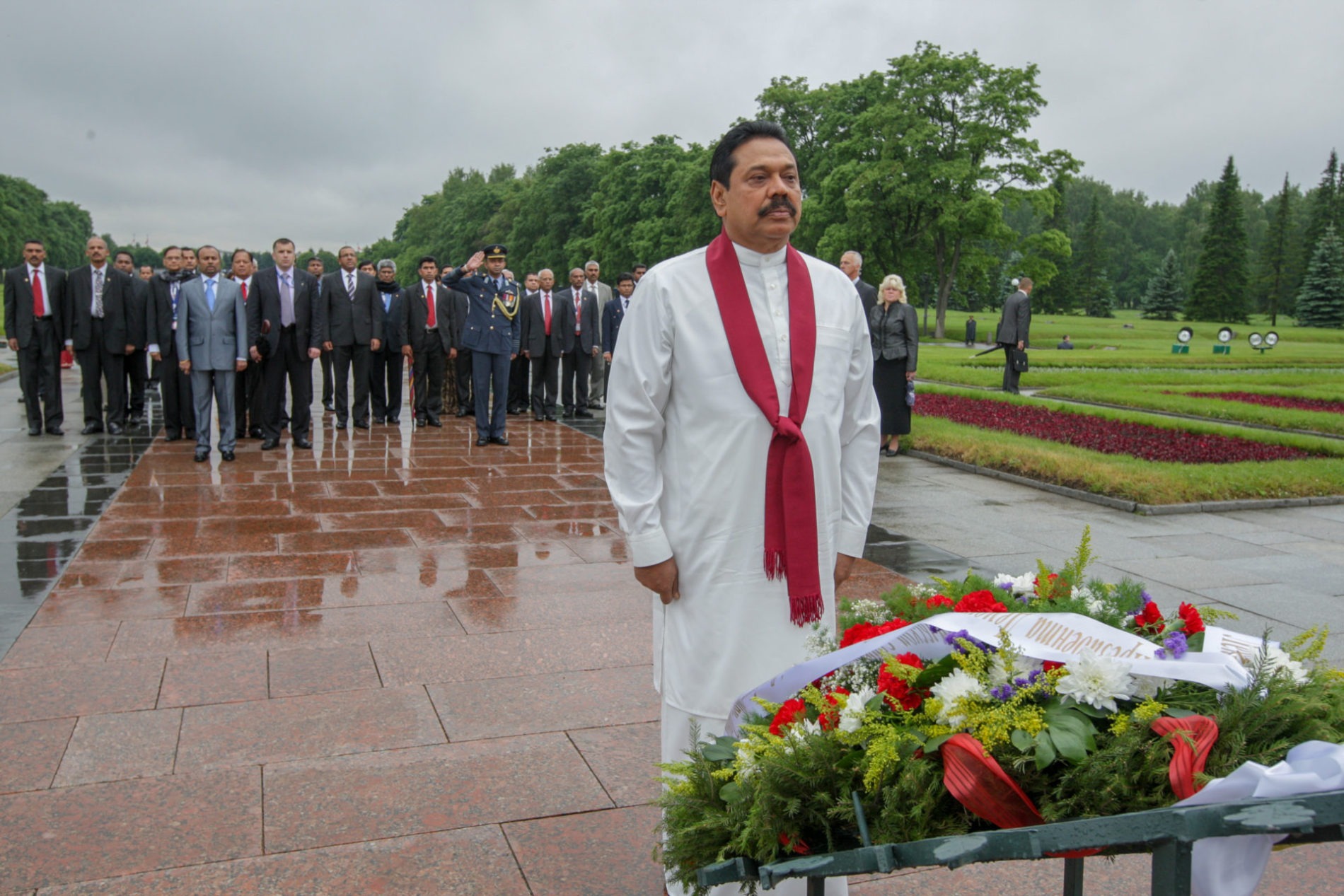
President Rajapaksa also visits and paid flower tribute at St. Petersburg Piskoryevskoye Memorial Complex, where over thousands of persons lost their lives during the second World War.
Piskoreyevskoe Memorial Complex
Leningrad siege is the most tragic page in the city’s history and in the history of the World War II. In the history of wars no city of the world gave so may lives for the Victory as Leningrad did.
More than million people (almost the same number of warriors, defenders died on the battle fields and died in the city hospitals) perished during the siege in Leningrad. Tens of thousands of people died during the evacuation. There are 186 common graves in the Piskaryovskoye cemetery, in which 420 thousands of inhabitants of the city, who died from hunger, bombing and shelling 70 thousands of soldiers, defenders of Leningrad are buried. May 9, 1960 on the fifteenth anniversary of the Victory Day, Piskaryovskoye memorial cemetery was solemnly open. Piskaryovskoye memorial cemetery is world famous, national monument of the history of the World War II, museum of the feat of Leningrad, school for teaching patriotism and love towards motherland. For the citizens of Russia, people living on the planet, who value piece and calmness on the earth, the memorial became the symbol of firmness, courage, selfless love to the motherland, surprising strength of spirit of the people – victors in the most murderous war in the world.
Leningrad siege is the most tragic page in the city’s history and in the history of the World War II. In the history of wars no city of the world gave so may lives for the Victory as Leningrad did. Taking into account political, economical and strategic factors, military and political leaders of the Nazi Germany have chosen Leningrad as the first object for attack and were going to wipe the city off the face of the earth. Capturing Leningrad was an “integral task” of the “Barbarossa” plan. Big number of military forces of Nazi Germany and Finnish army were involved in the battles on the western front.
Already on September 8, 1941 the city was completely blocked from the land. September 8 was the first day of the siege. The secret document # C-124 dated September 29, 1941, which was prepared in Hitler’s head office, stated the following: “2. Fuehrer has decided to wipe the city off the face of earth. 4. If due to the situation in the city they would decide to yield, these requests will be rejected, because the problems of preserving and feeding population cannot and should be solved by us”.
Striving to implement this plan, leaders of Hitler’s army made severe bombing and artillery shooting (during the siege about 150 thousands shells and over 107 thousands incendiary and high-explosive bombs). As the result -more than 5 million square meters were destroyed, actually every third house was in ruins. The most awful ordeal of the first autumn and winter of the siege was hunger. People died in the streets, factories, apartments…. the whole families died. The food rations on food coupons were decreased. Starting from November 20, 1941 as the result of bread ration decrease (other products were not available) during more than a month time clerks, dependants, children received 125 grams of bread, workers – 250 grams, 500 gram -soldiers on the front line.
Already in January 1942 all Leningrad cemeteries were heaped up with dead bodies. According to the decision of city authorities they have started mass burial at the vacant plot of land in the northern outskirts of the city close to railway station “Piskaryovka”. Burials were made daily, number of people was from three to ten thousands. The burials were made in huge graves-trenches. Piskaryovskoye Cemetery- More than million people (almost the same number of warriors, defenders died on the battle fields and died in the city hospitals) perished during the siege in Leningrad. Tens of thousands of people died during the evacuation. There are 186 common graves in the Piskaryovskoye cemetery, in which 420 thousands of inhabitants of the city, who died from hunger, bombing and shelling 70 thousands of soldiers, defenders of Leningrad are buried. On many city cemeteries the defenders of Leningrad are buried Bolsheokhtinskoye, Bogoslovskoye, Volkovskoye, Chesmenstkoye, Serafimovskoye, but Piskaryovskoye cemetery is the biggest among them. May 9, 1960 on the fifteenth anniversary of the Victory Day, Piskaryovskoye memorial cemetery is the largest cemetery in the world, where victims of the World War II are buried. Every year on May 9 – Victory Day, on June 22 -= the beginning of the World War II, September 8 – the beginning of the siege, January 27 – the raising of the siege, solemn and mourning ceremonies of laying wreathes and flowers to the Monument of Motherland and Eternal Flame are organized on Piskaryovskoye Memorial cemetery. Piskaryovskoye memorial cemetery is world famous, national monument of the history of the World War II, museum of the feat of Leningrad, school for teaching patriotism and love towards motherland. For the citizens of Russia, people living on the planet, who value piece and calmness on the earth, the memorial became the symbol of firmness, courage, selfless love to the motherland, surprising strength of spirit of the people – victors in the most murderous war in the world.
[ngg src=”galleries” ids=”81″ display=”basic_thumbnail”][:ru]Визиты президента на Пискаревском мемориальном комплексе
18 июня 2011
Президент Раджапакса также визиты и заплатил дань цветок в Санкт-Петербург Пискаревском мемориальном комплексе, где более тысячи людей потеряли свои жизни во время второй мировой войны.
Пискаревск мемориальном комплекс
Ленинградская блокада является наиболее трагическая страница в истории города и в истории Второй мировой войны. В истории войн не город в мире не дал, так может жизнь за Победу, как сделал в Ленинграде.
Более миллиона человек (почти то же самое количество воинов, защитников погибли на полях сражений и умер в больницах города) погиб во время осады Ленинграда. Десятки тысяч людей погибли во время эвакуации. Есть 186 братские могилы на кладбище Пискаревском, в которых 420 тысяч жителей города, который умер от голода, бомбежек и обстрелов 70 тысячи солдат, защитников Ленинграда похоронен. 9 мая 1960 на пятнадцатой годовщины Дня Победы, Пискаревском мемориальном кладбище был торжественно открыт. Пискаревском мемориальном кладбище является всемирно известным, национальный памятник истории Второй мировой войны, музей подвига Ленинграда, школой для преподавания патриотизма и любви к Родине. Для граждан России, живущих на планете, которые ценят покой и спокойствие на земле, мемориал стал символом стойкости, мужества, самоотверженной любви к Родине, удивительной силы духа народа — победители в самых убийственной Война в мире.
Ленинградская блокада является наиболее трагическая страница в истории города и в истории Второй мировой войны. В истории войн не город в мире не дал, так может жизнь за Победу, как сделал в Ленинграде. Принимая во внимание политические, экономические и стратегические факторы, военные и политические лидеры нацистской Германии выбрали Ленинград первого объекта для нападения и собирались стереть город с лица земли. Захват Ленинграда был «неотъемлемой задачей» из «Барбаросса». Большое количество военных сил фашистской Германии и финской армии были вовлечены в боях на Западном фронте.
Уже на 8 сентября 1941 года город был полностью блокирован с суши. 8 сентября был первый день осады. Секрет документ # С-124 от 29 сентября 1941 года, который был подготовлен в головном офисе Гитлера, заявил следующее: «. 2. Фюрер решил стереть город с лица земли 4. Если в связи с ситуацией в город они решат, чтобы получить эти запросы будут отклонены, потому что проблемы сохранения и кормления население не может и должна быть решена нами «.
Стремление к реализации этого плана, лидеры гитлеровской армии сделал серьезный взрыв и артиллерийские стрельбы (во время осады около 150 тысяч снарядов и более 107 тысяч зажигательные и фугасные бомбы). В результате -более 5 миллионов квадратных метров были разрушены, на самом деле каждый третий дом был в руинах. Самое ужасное испытание первой осени и зимы осады голод. Люди умирали на улицах, на заводах, квартир …. целые семьи погибли. Снизились В рационы питания на продовольственных купонов. Начиная с 20 ноября 1941 года в результате снижения хлебный паек (другие продукты не были доступны) в течение более, чем через месяц клерков, иждивенцев, дети получили 125 граммов хлеба, рабочие — 250 граммов, 500 грамм -soldiers на линии фронта ,
Уже в январе 1942 года все ленинградские кладбища завалены трупами. В соответствии с решением городских властей они начали массовое захоронение на вакантный участок земли в северной окраине города, недалеко от железнодорожного вокзала «Piskaryovka». Погребения были сделаны в день, количество людей, была от трех до десяти тысяч. Захоронения были сделаны в огромных могил траншей. Пискаревском Cemetery- Более миллиона человек (почти столько же воинов, защитников погибли на полях сражений и умер в больницах города) погиб во время осады Ленинграда. Десятки тысяч людей погибли во время эвакуации. Есть 186 братские могилы на кладбище Пискаревском, в которых 420 тысяч жителей города, который умер от голода, бомбежек и обстрелов 70 тысячи солдат, защитников Ленинграда похоронен. На многих кладбищ города защитники Ленинграда похоронен Bolsheokhtinskoye, Богословское, Волковское, Chesmenstkoye, Серафимовском, Пискаревском кладбище, но является самым большим среди них. 9 мая 1960 на пятнадцатой годовщины Дня Победы, Пискаревском мемориальном кладбище является крупнейшим кладбище в мире, где похоронены жертвы Второй мировой войны. Каждый год 9 мая — День Победы, 22 июня — = начало Второй мировой войны, 8 сентября — начало осады, 27 января — повышение осады, торжественный и траурных церемоний по прокладке венки и цветы к Монумент Родины и Вечному огню организованы на Пискаревском мемориальном кладбище. Пискаревском мемориальном кладбище является всемирно известным, национальный памятник истории Второй мировой войны, музей подвига Ленинграда, школой для преподавания патриотизма и любви к Родине. Для граждан России, живущих на планете, которые ценят покой и спокойствие на земле, мемориал стал символом стойкости, мужества, самоотверженной любви к Родине, удивительной силы духа народа — победители в самых убийственной Война в мире.
[ngg src=”galleries” ids=”81″ display=”basic_thumbnail”][:SI]President visits and paid flower tribute at Piskariovskoye Memorial Complex
18th June 2011
President Rajapaksa also visits and paid flower tribute at St. Petersburg Piskoryevskoye Memorial Complex, where over thousands of persons lost their lives during the second World War.
Piskoreyevskoe Memorial Complex
Leningrad siege is the most tragic page in the city’s history and in the history of the World War II. In the history of wars no city of the world gave so may lives for the Victory as Leningrad did.
More than million people (almost the same number of warriors, defenders died on the battle fields and died in the city hospitals) perished during the siege in Leningrad. Tens of thousands of people died during the evacuation. There are 186 common graves in the Piskaryovskoye cemetery, in which 420 thousands of inhabitants of the city, who died from hunger, bombing and shelling 70 thousands of soldiers, defenders of Leningrad are buried. May 9, 1960 on the fifteenth anniversary of the Victory Day, Piskaryovskoye memorial cemetery was solemnly open. Piskaryovskoye memorial cemetery is world famous, national monument of the history of the World War II, museum of the feat of Leningrad, school for teaching patriotism and love towards motherland. For the citizens of Russia, people living on the planet, who value piece and calmness on the earth, the memorial became the symbol of firmness, courage, selfless love to the motherland, surprising strength of spirit of the people – victors in the most murderous war in the world.
Leningrad siege is the most tragic page in the city’s history and in the history of the World War II. In the history of wars no city of the world gave so may lives for the Victory as Leningrad did. Taking into account political, economical and strategic factors, military and political leaders of the Nazi Germany have chosen Leningrad as the first object for attack and were going to wipe the city off the face of the earth. Capturing Leningrad was an “integral task” of the “Barbarossa” plan. Big number of military forces of Nazi Germany and Finnish army were involved in the battles on the western front.
Already on September 8, 1941 the city was completely blocked from the land. September 8 was the first day of the siege. The secret document # C-124 dated September 29, 1941, which was prepared in Hitler’s head office, stated the following: “2. Fuehrer has decided to wipe the city off the face of earth. 4. If due to the situation in the city they would decide to yield, these requests will be rejected, because the problems of preserving and feeding population cannot and should be solved by us”.
Striving to implement this plan, leaders of Hitler’s army made severe bombing and artillery shooting (during the siege about 150 thousands shells and over 107 thousands incendiary and high-explosive bombs). As the result -more than 5 million square meters were destroyed, actually every third house was in ruins. The most awful ordeal of the first autumn and winter of the siege was hunger. People died in the streets, factories, apartments…. the whole families died. The food rations on food coupons were decreased. Starting from November 20, 1941 as the result of bread ration decrease (other products were not available) during more than a month time clerks, dependants, children received 125 grams of bread, workers – 250 grams, 500 gram -soldiers on the front line.
Already in January 1942 all Leningrad cemeteries were heaped up with dead bodies. According to the decision of city authorities they have started mass burial at the vacant plot of land in the northern outskirts of the city close to railway station “Piskaryovka”. Burials were made daily, number of people was from three to ten thousands. The burials were made in huge graves-trenches. Piskaryovskoye Cemetery- More than million people (almost the same number of warriors, defenders died on the battle fields and died in the city hospitals) perished during the siege in Leningrad. Tens of thousands of people died during the evacuation. There are 186 common graves in the Piskaryovskoye cemetery, in which 420 thousands of inhabitants of the city, who died from hunger, bombing and shelling 70 thousands of soldiers, defenders of Leningrad are buried. On many city cemeteries the defenders of Leningrad are buried Bolsheokhtinskoye, Bogoslovskoye, Volkovskoye, Chesmenstkoye, Serafimovskoye, but Piskaryovskoye cemetery is the biggest among them. May 9, 1960 on the fifteenth anniversary of the Victory Day, Piskaryovskoye memorial cemetery is the largest cemetery in the world, where victims of the World War II are buried. Every year on May 9 – Victory Day, on June 22 -= the beginning of the World War II, September 8 – the beginning of the siege, January 27 – the raising of the siege, solemn and mourning ceremonies of laying wreathes and flowers to the Monument of Motherland and Eternal Flame are organized on Piskaryovskoye Memorial cemetery. Piskaryovskoye memorial cemetery is world famous, national monument of the history of the World War II, museum of the feat of Leningrad, school for teaching patriotism and love towards motherland. For the citizens of Russia, people living on the planet, who value piece and calmness on the earth, the memorial became the symbol of firmness, courage, selfless love to the motherland, surprising strength of spirit of the people – victors in the most murderous war in the world.
[ngg src=”galleries” ids=”81″ display=”basic_thumbnail”][:]